
C.W. Parker - Horse
Catalog #019 127×120×20cm
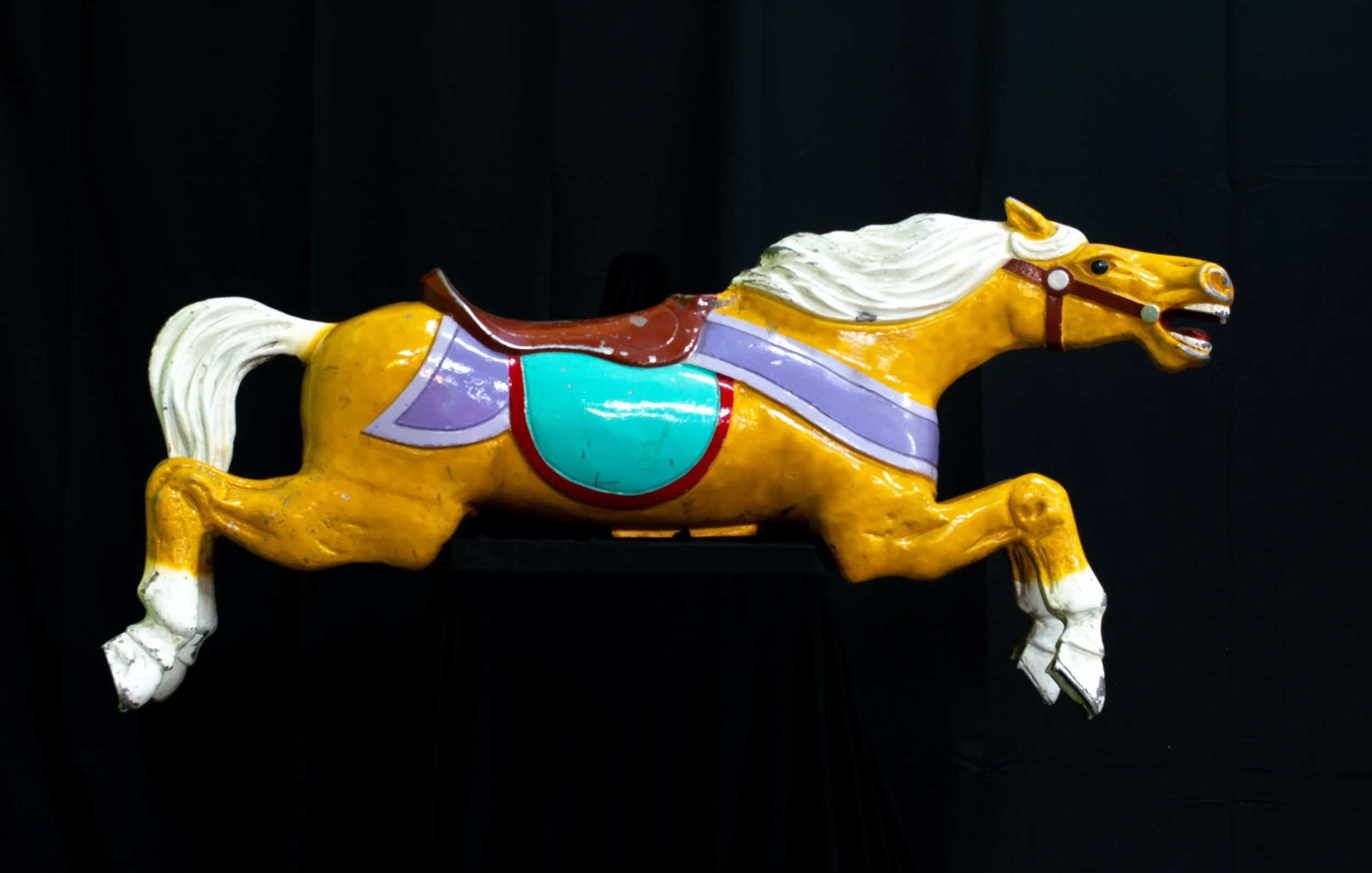
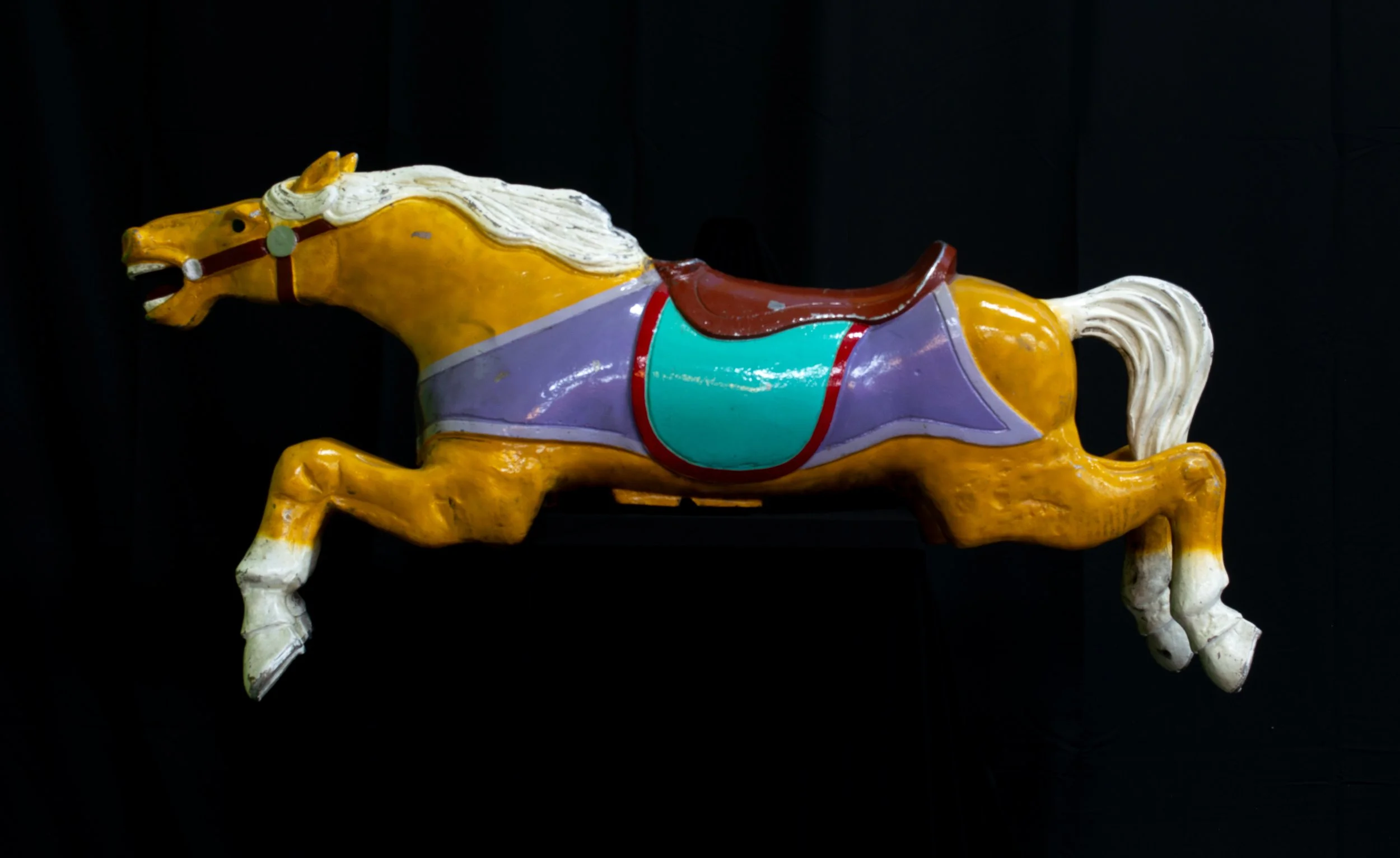
-
A cast aluminum jumper horse in the C.W. Parker style, painted in a warm yellow-gold body color with a white mane and tail. The figure is captured in a full-gallop pose with all four legs extended, open mouth showing teeth, and a simple dark bridle fitted with metal rosette studs. The trappings consist of a lavender blanket with a teal saddle pad edged in red and a brown saddle. White stockings mark all four legs. The smooth, uniform surface is consistent with cast aluminum construction (inferred from photographic evidence and owner identification).
-
Purchased from Morphy Auctions (reported). The owner indicated that a catalog record exists for this lot and that detailed acquisition information — including sale date, lot number, and price paid — will be supplied from the Morphy catalog in a follow-up session. "All the metal stuff… we'll have the catalog on this" (reported).
-
Pre-auction provenance is unknown. The Morphy Auctions catalog for this lot, once retrieved, may contain consignor information or prior exhibition history. No independent provenance leads have been identified at this time.
-
The owner describes this figure as "Parker style metal" (reported). The Leavenworth, Kansas manufacturer began producing aluminum carousel horses around 1925 as a cost-saving alternative to hand-carved wooden figures, completing the transition to all-aluminum production by approximately 1930 (sourced: Wikipedia; Kansas Sampler Foundation; C.W. Parker Carousel Museum records). Paul Parker, C.W.'s son, continued manufacturing aluminum horses until the company closed in 1955 (sourced: Wikipedia). The company produced approximately 1,000 complete carousels over its history, making individual aluminum horses from this factory relatively common on the secondary market (sourced: Wikipedia).
Authenticated Parker aluminum horses typically carry metal shoes cast with the words "C.W. Parker, Leavenworth, Kansas," though reproduction shoes are widely available and should not be treated as conclusive identification on their own (sourced: CarouselsOnline.com buyer's guide). The hooves in the photographs are painted over and the markings, if present, are not visible. Confirmation of any cast maker's marks on the shoes is an essential follow-up item.
The phrase "Parker style" in the owner's description and in auction listings can denote either a confirmed Parker figure or an aluminum horse produced in the Parker tradition by another manufacturer. A second major American producer of aluminum carousel horses — based in western New York — was responsible for an even larger volume of portable aluminum carousel horses from the 1930s through the 1950s (sourced: Allan Herschell Company historical records). Without visible shoe markings, catalog documentation, or physical inspection, attribution cannot be confirmed beyond "Parker style" at this time.
Cast aluminum carousel horses occupy the lower end of the antique carousel market relative to their hand-carved wooden predecessors. Auction records for generic mid-century aluminum horses show realized prices typically ranging from $150 to $800, with confirmed and well-painted examples from named manufacturers occasionally exceeding that range (sourced: LiveAuctioneers; JustAnswer appraisals; 1stDibs market data). One confirmed Parker aluminum horse with marked shoes and excellent condition was listed at approximately $400–$600 at auction (sourced: LiveAuctioneers). Wooden Parker horses — particularly jeweled or flowered outer-row jumpers from the pre-1925 hand-carved era — command substantially higher prices.
-
The figure appears to be in good structural condition with a complete, professional repaint in bright, saturated colors. No visible cracks, dents, or casting defects are apparent in the photographs. The paint surface shows minor chipping on the saddle and scattered small losses on the body, consistent with display wear. No missing elements are visible — the ears, tail, and all four legs are intact. The bridle hardware (rosette studs) appears to be original or period-appropriate. An orange identification tag hangs from the bridle in two photographs.
-
Low. The owner identifies the figure as "Parker style" but the attribution is not independently confirmed. No maker's marks are visible in the photographs, no catalog documentation has been reviewed, and the distinction between a confirmed Parker aluminum horse and a Parker-style horse from another manufacturer remains unresolved. Confidence should be revisited once the Morphy catalog record is retrieved.
-
Owner interview recording (9/25/2025): Brief identification and acquisition source. Owner deferred full interview pending retrieval of Morphy Auctions catalog documentation.
Photographs (DSC_2393–DSC_2396): Four images showing both sides of the figure, with whiteboard notation "#019" and date "9/25/25."
Wikipedia: C.W. Parker biography; C.W. Parker Carousel Museum article; Allan Herschell Company article.
Kansas Sampler Foundation (kansassampler.org): Parker factory history, transition from wood to aluminum.
C.W. Parker Carousel Museum (Leavenworth, KS): Museum records confirming Parker aluminum carousel on display.
CarouselsOnline.com buyer's guide: Parker shoe identification and reproduction warnings.
LiveAuctioneers: Auction records for Parker and generic aluminum carousel horses.
1stDibs / JustAnswer: Market valuation context for aluminum carousel horses.