
Allan Herschell Company - 1915-1970
A Scottish immigrant who became one of the most prolific figures in American carousel manufacturing — and one of the most confusing, because his name appears on three separate companies, two of which produced figures simultaneously, and one of which eventually absorbed the other. Untangling which "Herschell" made what requires keeping the company succession straight.
The Man
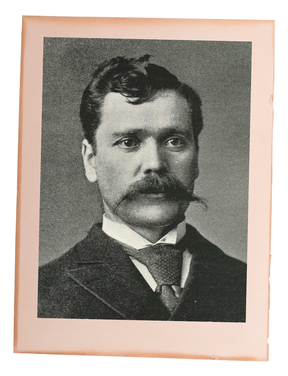
Allan Herschell was born April 27, 1851, in Arbroath, Forfarshire, Scotland (sourced). He emigrated to the United States in 1870 and settled in the Buffalo, New York area, where he initially worked as a foundry foreman (sourced). In 1872 he and English-born partner James Armitage formed a small iron foundry and machinery shop in North Tonawanda (sourced). The pivot to amusement manufacturing came after Herschell, on a trip to New York City around 1880, encountered a steam-driven riding gallery and recognized that his existing steam-boiler business was already producing the hardest part (sourced). The first Armitage-Herschell carousel followed in 1883 (sourced). Over the next four decades Herschell would launch, lose, and rebuild three successive companies before retiring in 1923 and dying in 1927 (sourced). Across all his ventures, the cumulative output is documented at over 3,000 hand-carved wooden carousels, shipped throughout North America, Mexico, South Africa, and India (sourced).
The Four-Company Succession
The Herschell name represents not a single firm but four overlapping ventures, two of which operated as direct competitors for twenty-six years before reuniting:
1. Armitage-Herschell Company (1872–1899/1903). Founded with James Armitage. Initially produced steam engines, boilers, and foundry goods; began carousel production in 1883 with the "Improved Steam Riding Gallery." Specialized in portable, country-fair-style track machines suited to traveling operators. The bankruptcy date appears variably as 1899 (sourced — North Tonawanda historical marker) or 1903 (sourced — Wikipedia, museum sources). The discrepancy likely reflects the gap between filing and final asset disposition.
2. Herschell-Spillman Company (1900–1919). Founded by Herschell with his brother-in-law Edward Spillman; the firm acquired the Armitage-Herschell assets after the bankruptcy (sourced). Continued the country-fair portable style at first, then expanded into elaborate park-model carousels with full menagerie complements — giraffes, kangaroos, the well-known hop-toad, and others (sourced). By the 1910s it was the largest carousel manufacturer in the United States (sourced). Allan Herschell retired from this firm in 1913 due to ill health (sourced — 1911 is also reported), and the company continued without him.
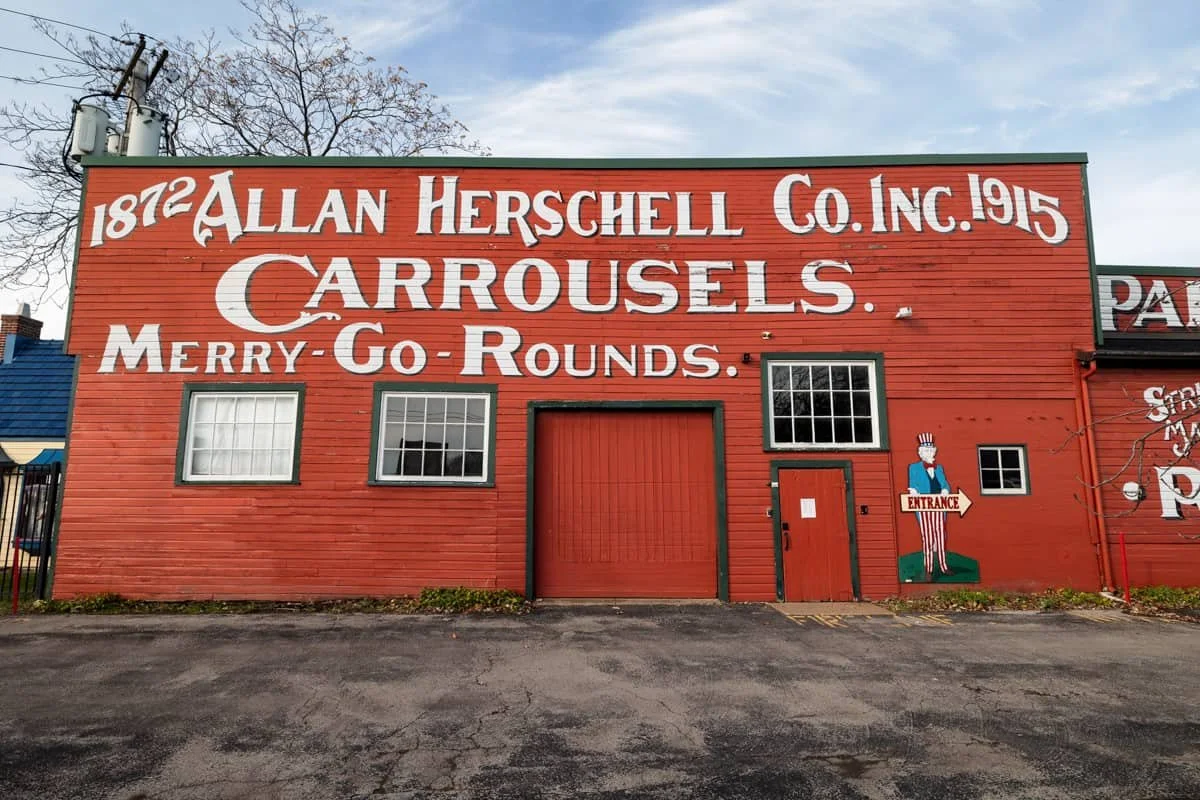
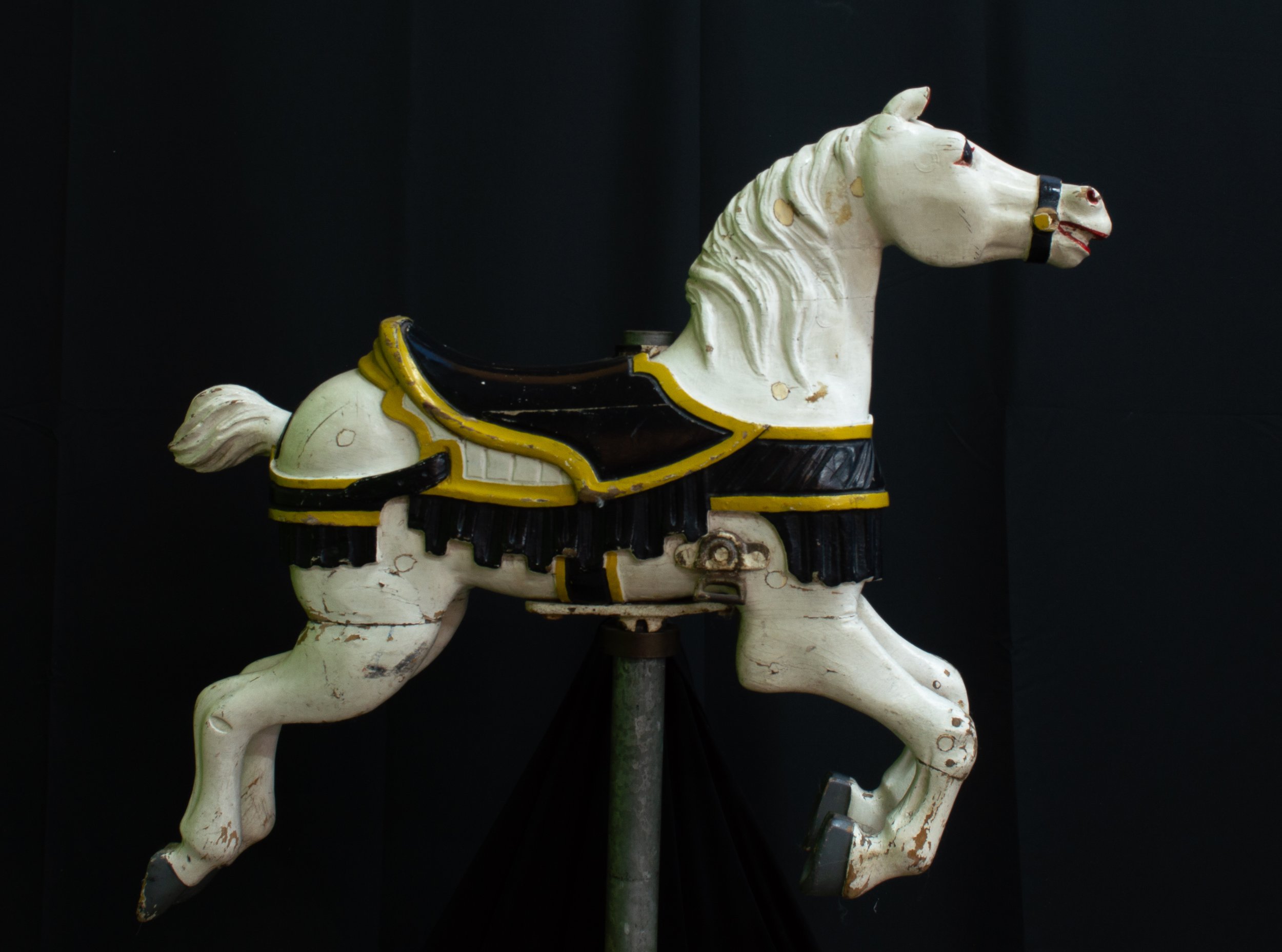
3. Allan Herschell Company (1915–1970). Founded after Herschell came out of retirement, operating as a direct competitor to his former firm (sourced). Specialized in portable carnival-circuit carousels with horses in rigid poses, designed for compact shipping between towns (sourced). After Allan's death in 1927, the company introduced cast-aluminum legs to its wooden horses (sourced). The Allan Herschell Company purchased Spillman Engineering in 1945, reuniting the two Herschell lineages under one operation (sourced). Sold to Chance Manufacturing of Wichita, Kansas in 1970; the surviving factory assets returned to North Tonawanda in 1997 when the Carousel Society of the Niagara Frontier acquired them at auction (sourced).
4. Spillman Engineering Corporation (1919–1945). Herschell-Spillman renamed itself in 1919 to avoid confusion with the newly formed Allan Herschell Company (sourced). Continued the park-model line, shifted toward predominantly equine machines with limited menagerie work, and pioneered aluminum components from the late 1920s — producing an all-aluminum horse by 1930 (sourced). Absorbed by the Allan Herschell Company in 1945.
033