
-
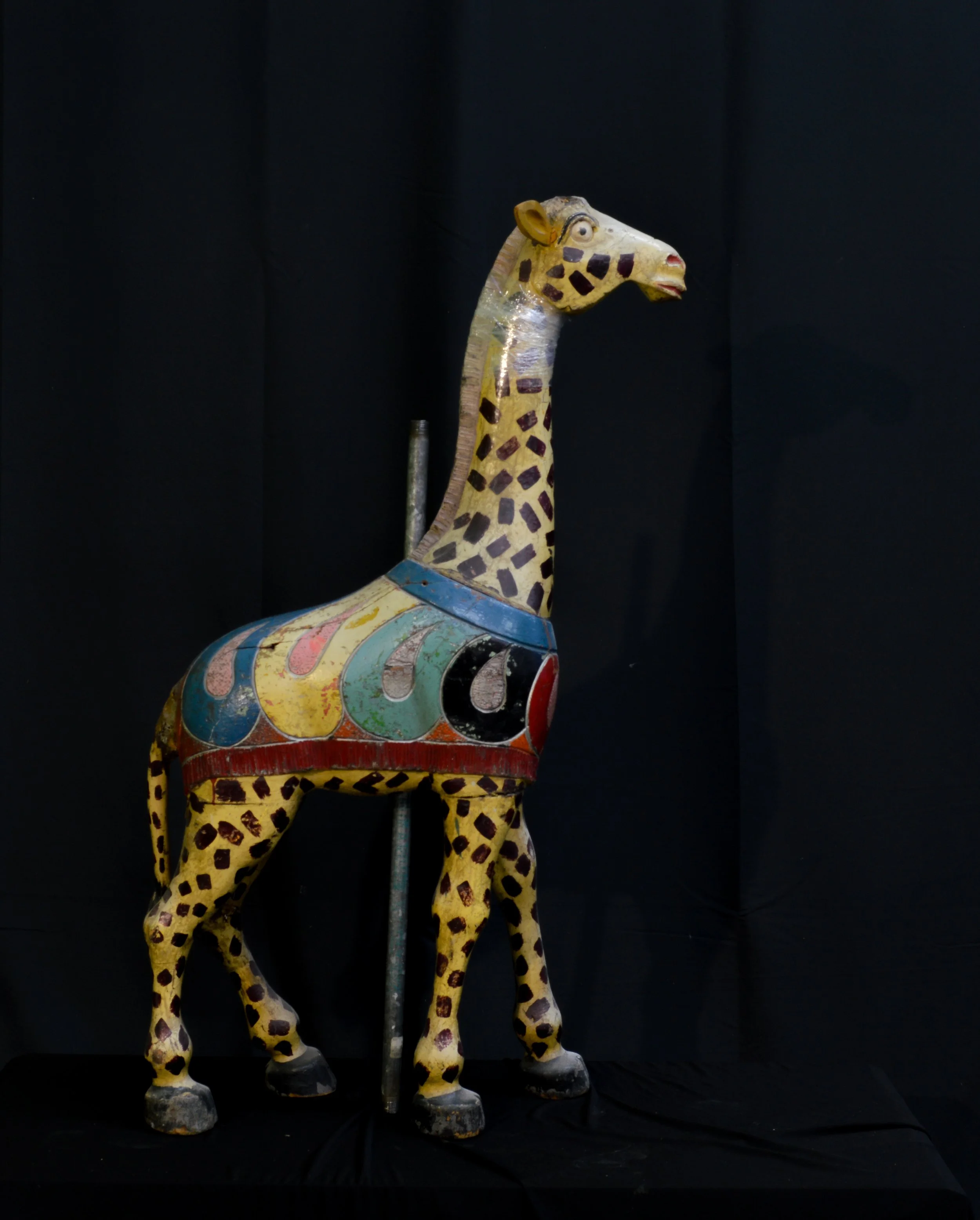
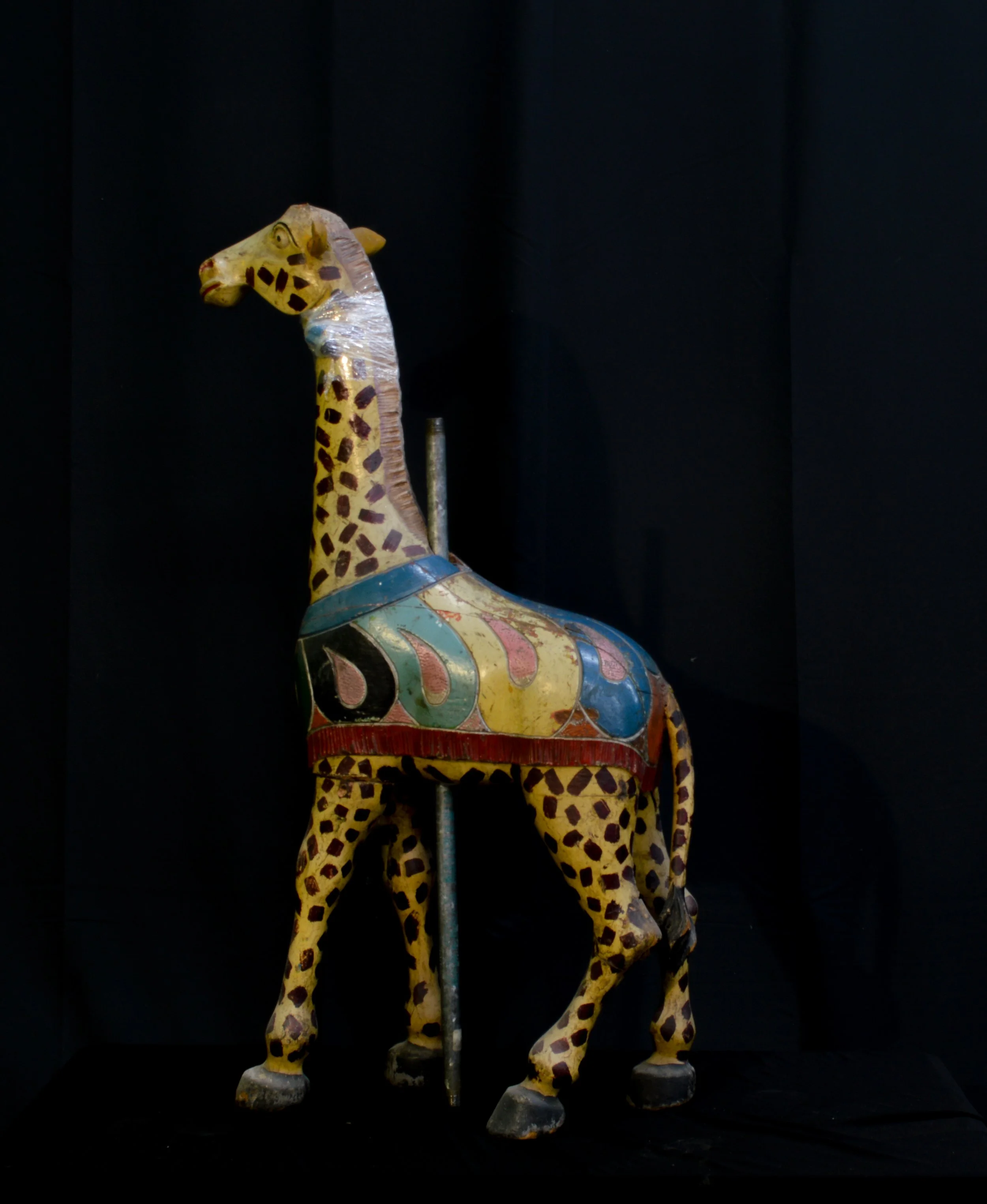
A hand-carved and painted carousel giraffe in stander pose, with maker attribution unestablished, dated here conservatively to the early-to-mid twentieth century. The figure is described by the owner as children's scale (reported) and the measuring rod in Image 2 indicates approximately 40–46 inches at the head — significantly smaller than documented full park-scale examples of comparable maker types, which typically run 60–72 inches. All four feet are planted. The body is yellow-ochre throughout with a dense irregular dark brown spot pattern across the body, neck, and legs. The neck is long and gracefully tapered; two small horn nubs (ossicones) are present at the crown. The face — clearest in Image 4 (romance side) — shows a painted eye with white sclera, small ears, and red-painted lips. Two carousel poles pass through the body at the mid-back and forward body positions. The saddle/blanket area carries a notably expressive multi-color decorative treatment: a teal/turquoise collar band across the upper back, below which a bold flame and teardrop/paisley pattern wraps the body in teal, cobalt blue, pink/salmon, and black, with a large dark circle element visible on the romance side (Image 4) and a red lower girth band completing the caparison. This decoration is carved in low relief and painted, with visible crazing and paint loss consistent with age and working use.
-
The owner's brief commentary references Morphy Auctions in the context of this figure (reported), suggesting either that this piece was acquired there or that the owner associates it with that house's inventory. Whether this represents an actual acquisition record or a comparative reference is unclear. Source, date, and price paid are pending a dedicated interview session.
-
Unknown. The carousel of origin has not been established. No park, operator, or prior owner history is on record.
-
Carousel figures of this animal type were produced by multiple American and European makers during the Golden Age of carousel production (roughly 1880–1930). Among American makers, the Herschell-Spillman Company is the best-documented producer of smaller menagerie figures including this type: multiple surviving Herschell-Spillman park-scale carousels include this animal type in their menagerie inventories Vintagecarousels, and the company's children's carousel platforms also featured this type among their smaller-scale figures. The LiveAuctioneers price database records an attributed Herschell-Spillman stander of this animal type described as having "blue painted trappings set with jewels" — consistent with the teal/blue banding visible in this figure's decoration (sourced, LiveAuctioneers). At the 1989 Rocky Point carousel auction, a Herschell-Spillman full-scale figure of this type sold for just under $40,000. Carouselhistory Among named American makers, dealer records at AntiqueCarousels.com document full-scale comparable figures from the Dentzel company selling in the $13,500–$22,500 range (sourced, AntiqueCarousels.com); children's scale examples would command less.
However, the specific decorative treatment on this figure — the bold flame and teardrop/paisley motifs, the large dark disc element on the romance side, and the overall warmth and expressiveness of the painted caparison — is not consistent with the more standardized saddle-blanket patterns typical of American commercial production from the Herschell-Spillman or comparable workshops. This decorative profile more closely resembles the painted folk art traditions of Mexican and Latin American carousel production, where bold multi-color flame and geometric motifs on warm ground colors are characteristic. This collection includes a second figure of this animal type attributed to a Mexican carver (ID 002, acquired from Oregon City), which was acquired separately and represents a distinct piece; the present figure's decorative treatment invites comparison with that attribution. No determination of Mexican or Latin American origin can be made from photographs alone, and the attribution question remains open.
The figure type is among the less commonly encountered menagerie animals on the private market, appearing infrequently in auction catalogs relative to horses. Children's scale examples are rarer still with limited public auction comparables.
-
Pending owner assessment and physical examination. Photographs show visible crazing, paint loss, and surface wear throughout the decorative caparison area, consistent with extensive working life. The body spot pattern shows better preservation than the blanket decoration. The hooves appear darkened with age and wear. The paint surface has character and age appropriate to an early-to-mid twentieth-century piece, but whether it represents original factory paint, an early restoration, or a later repaint requires hands-on examination.
-
Low. Maker attribution is unestablished. The owner provides no specific attribution. The decorative treatment raises an open question about possible Mexican or Latin American origin that cannot be resolved from photographs alone, and no provenance or acquisition record is currently on file.
-
Owner interview (brief; figure identification, children's scale characterization, Morphy Auctions reference)
Four photographs (DSC_2650, DSC_2651, DSC_2652, DSC_2653): ID card view, full figure with measuring rod, non-romance side, romance side
VintageCarousels.com (operating carousel census documenting menagerie inventories)
CarouselHistory.com (1989 auction price record)
AntiqueCarousels.com (comparable menagerie figure price records)
LiveAuctioneers price database (attributed Herschell-Spillman comparable)
Previous
Previous
Unknown-Nodding Donkey
Next
Next