
Unknown - Cigar Rooster
Catalogue # 023 80×68×40cm
-
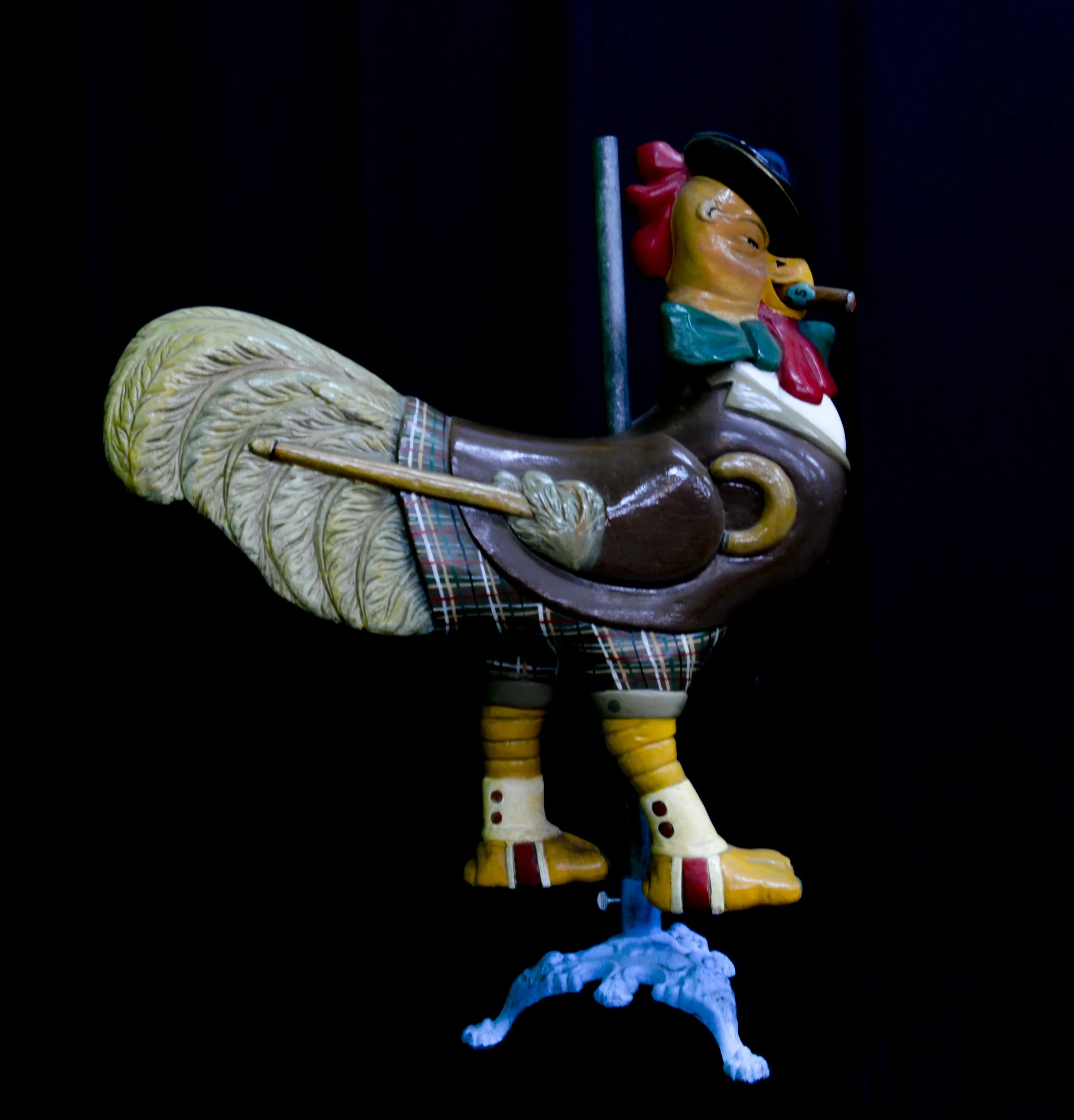
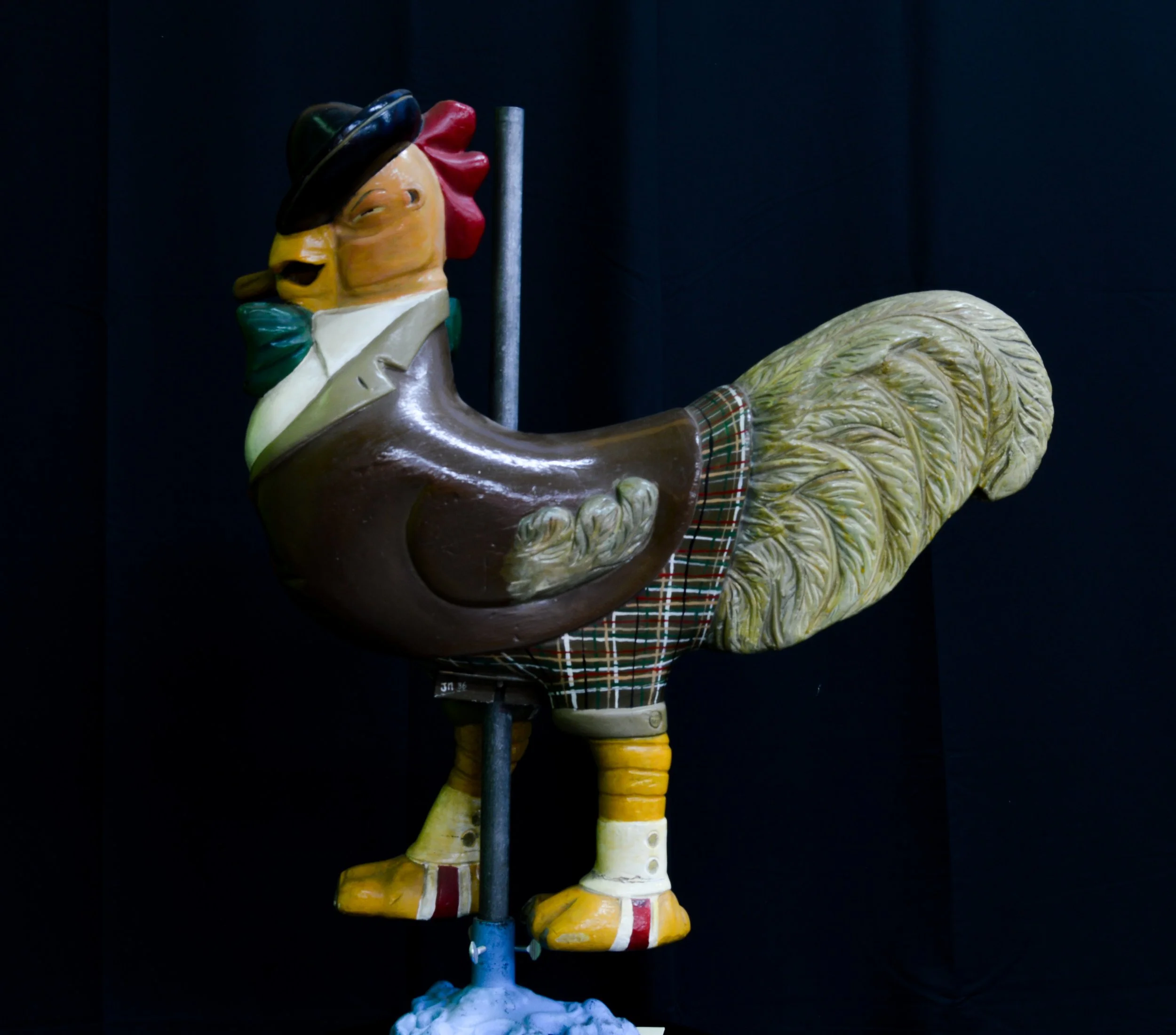
A children's-scale carousel figure depicting an anthropomorphized rooster dressed as a dapper gentleman: black flat cap with red cockscomb showing beneath, a cigar clamped in the beak, green bow tie and white shirt collar, tartan bloomers, yellow legs with cream spats trimmed in red, and a walking stick or cane held in one wing. The body is brown with a curling decorative element at the base, and the tail fans outward in layered, cream-yellow feathering with detailed surface carving. The figure stands upright on two legs — a humanized stance rather than a galloping pose — and is mounted on a steel pole with an ornate cast iron, claw-footed display base. The owner describes it as "very French" and notes the character has a refinement absent from the Mexican rooster figures in the collection (reported).
-
Acquired from Morphy Auctions (reported). Specific sale date and lot number are not yet recovered; the owner notes these can be retrieved once the list of lot numbers is compiled. Price paid is unknown pending that retrieval.
-
No prior ownership history documented. Morphy Auctions handles crossover amusement and decorative arts material, and the consignment chain before that sale is not on record. The Morphy lot record, once retrieved, may identify the consignor or indicate earlier auction history — this is the primary provenance lead available.
-
The owner's French attribution is supported circumstantially by the figure's character and style, though no maker has been specifically identified (reported, not independently confirmed).
French fairground carvers specialized in depictions of local animals — cows, pigs, roosters — as their earliest carousel subjects, and these realistic sculptures were sometimes adorned with ribbons or hats. The piece presented here takes that tradition substantially further: the full anthropomorphic treatment — tailored clothing, cigar, spats, hat, cane — places this figure within a more developed tradition of character or novelty fairground figures rather than in the straight menagerie line. French carousels and fairground attractions diversified into character and themed figures over the course of the 19th century, with showmen creating scenarios and figure types intended to attract and entertain a broader audience.
Gustave Bayol (1859–1931) of Angers documented production of carved and painted timber juvenile carousel figures of running cockerels, including sets sold directly from showmen families. The anthropomorphized character style of this piece extends beyond the naturalistic running-rooster forms documented for that workshop, and no comparably dressed or character-format carousel rooster has been identified in auction records searched across LiveAuctioneers, Morphy Auctions, Bonhams, Christie's, and specialist carousel dealers (sourced — no comparable found). The absence of auction comparables for this specific figure type is itself a meaningful data point: character-format juvenile fairground figures do not circulate in the American specialist carousel market with any frequency, and the category is poorly documented in English-language auction records.
In the American carousel tradition, the rooster as a carousel figure type was carved by only two manufacturers, making it among the rarest menagerie subjects in that tradition. This piece is not American — its upright humanized stance, character costume detail, and scale are inconsistent with the production conventions of any documented American maker. The French attribution therefore rests on: the owner's direct assessment (reported); the figure type's consistency with French fairground character-figure traditions (inferred); and the absence of comparable figure types in American or English production records (inferred from sourced research).
The cast iron claw-footed base with steel pole appears to be a collector presentation stand rather than original fairground mounting hardware (inferred from photographs).
-
Surface paint appears glossy and even across both sides, suggesting either a thorough restoration or a material composition — such as plaster, composition, or cast material — that presents differently from typical aged carved wood. The tartan pattern is precisely rendered with no visible edge breakup. Wear consistent with age and handling is present at the feet and lower spats area. Formal condition rating pending owner assessment and material confirmation. The cast iron base shows paint in good condition.
-
Owner interview, recorded, September 2025
Photographs: four images (DSC_2418, 2422, 2423, 2424), analyzed prior to writing
Arts Forains Museum, Paris (arts-forains.com): French fairground figure tradition and rooster as subject type
Drew Pritchard Ltd. (drewpritchard.co.uk): Gustave Bayol juvenile carousel cockerel documentation
CarouselHistory.com: American rooster carousel production context
LiveAuctioneers, Morphy Auctions, Bonhams, Christie's, specialist dealers: searched; no directly comparable anthropomorphized character rooster carousel figure identified in available records
-
Medium. French origin is plausible and supported by character style; no maker has been identified; acquisition date, lot number, and material composition remain unresolved. Attribution rests on owner assessment and circumstantial contextual evidence without a documentary anchor.