
Mexican Pieces
Mexican carousel carving is the part of the collection that most rewards being looked at on its own terms. The tradition developed in parallel to — but largely independent of — the American factory work, and the figures reflect a different set of priorities: hand-carved rather than factory-produced, often unsigned, often made for traveling fairs or smaller children's carousels rather than for permanent installations. The named carvers who do surface in the record — Ortega, Flores — represent only a fraction of the hands that produced the surviving body of work, and a substantial share of the Mexican figures here are attributed only to "carver unknown," which in this context describes the field rather than a gap in research.
What the Mexican figures share is a visual idiom distinct from anything the American or European traditions produced. The animals are often invented as much as observed — gorillas, mighty mice, witches, armored horses, centaurs alongside the more familiar pigs and goats — and the carving carries a folk-art directness that the factory traditions deliberately moved away from. Several of the figures in this section have been documented in the standard reference literature on Mexican carousel art, including pieces appearing on the cover of The Art of the Carousel and in Carrousel Art magazine.
Provenance for the Mexican figures runs through a small number of sources: dealers and collectors who worked the Mexican market directly, and the Youree collection of Oregon City, which served as a clearinghouse for Mexican material moving into American collections in the late twentieth century. Auction provenance — primarily through Morphy Auctions — accounts for the remainder. Each entry combines direct observation, owner interview material, and independent research, with every claim labeled as reported, sourced, or inferred.
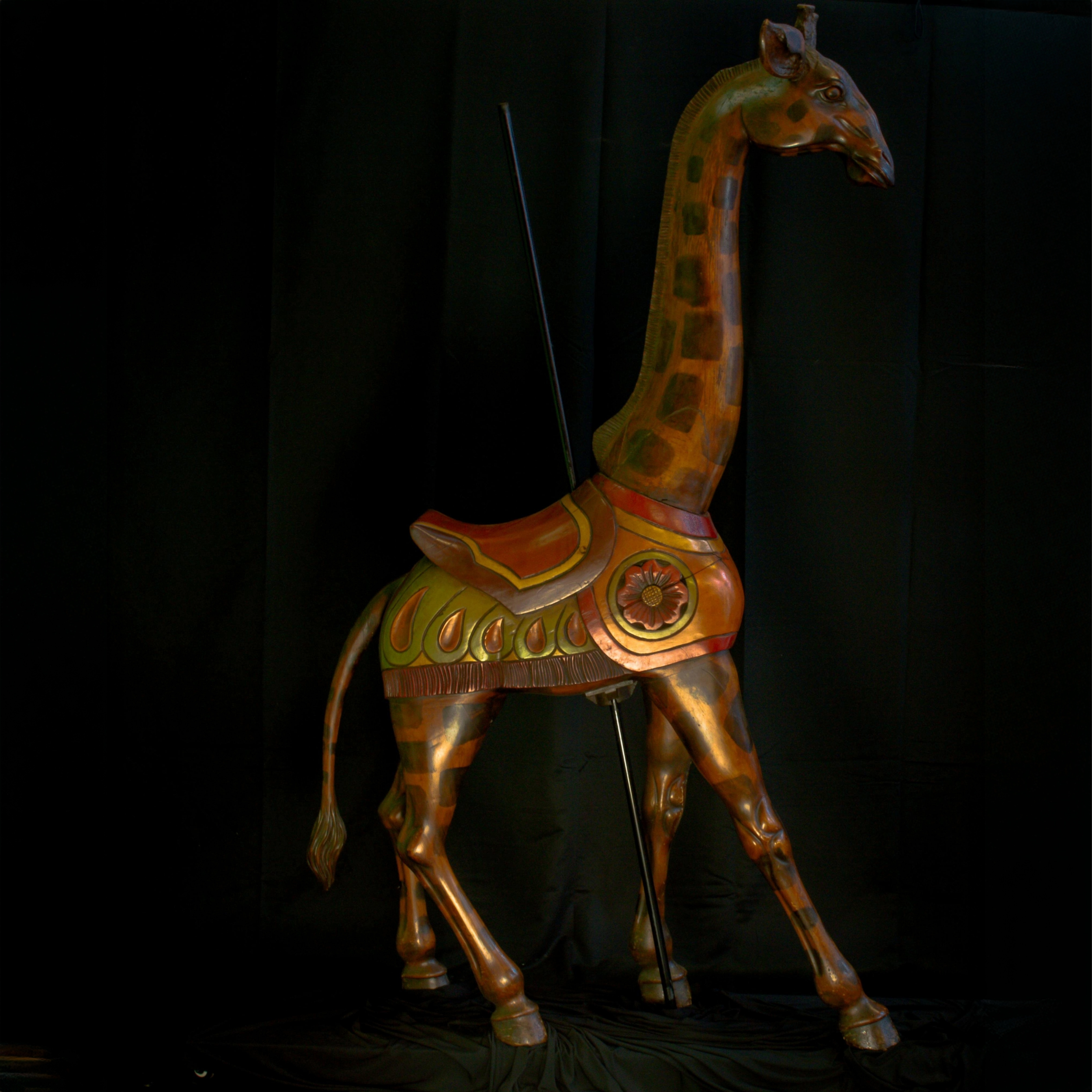
Ortega
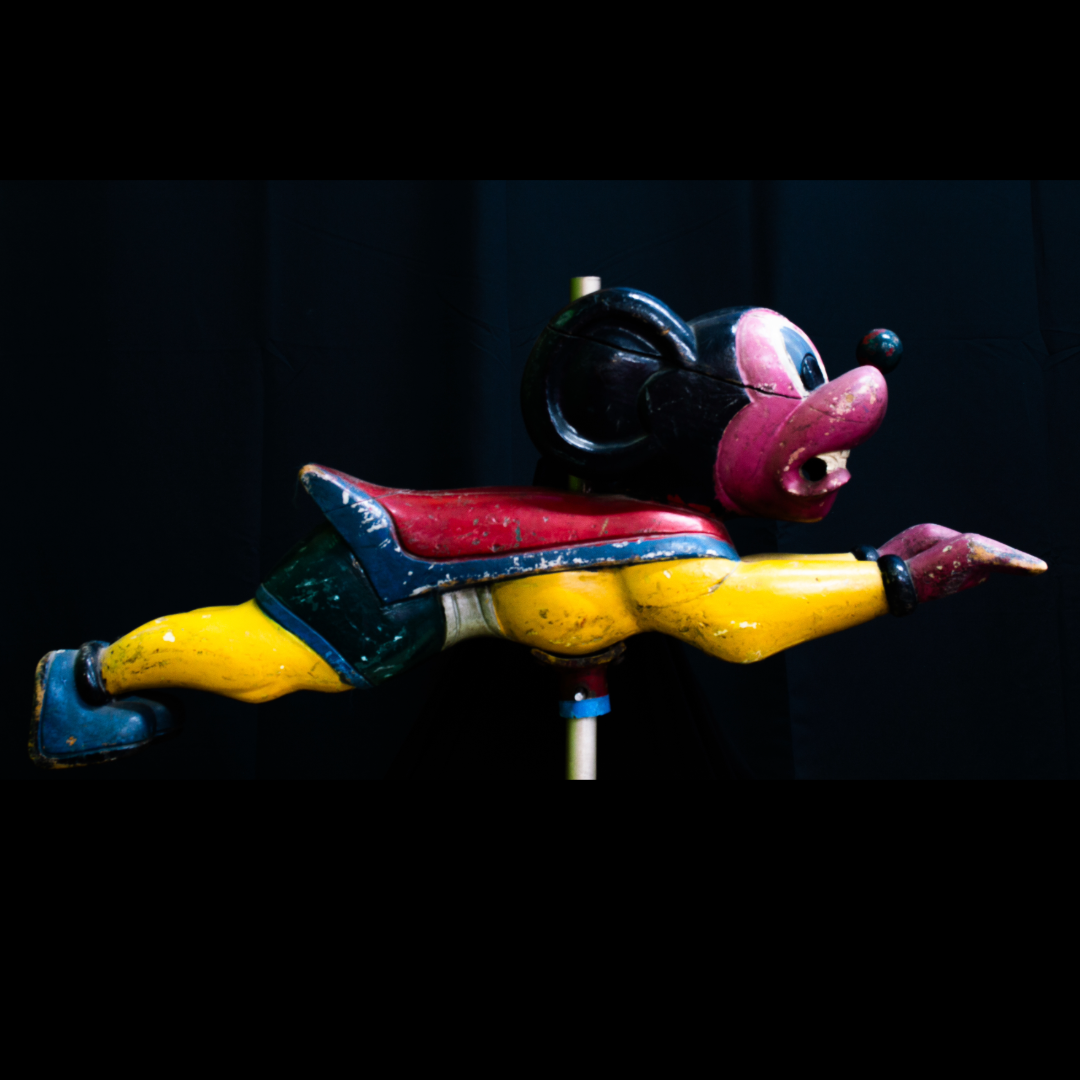
Unknown
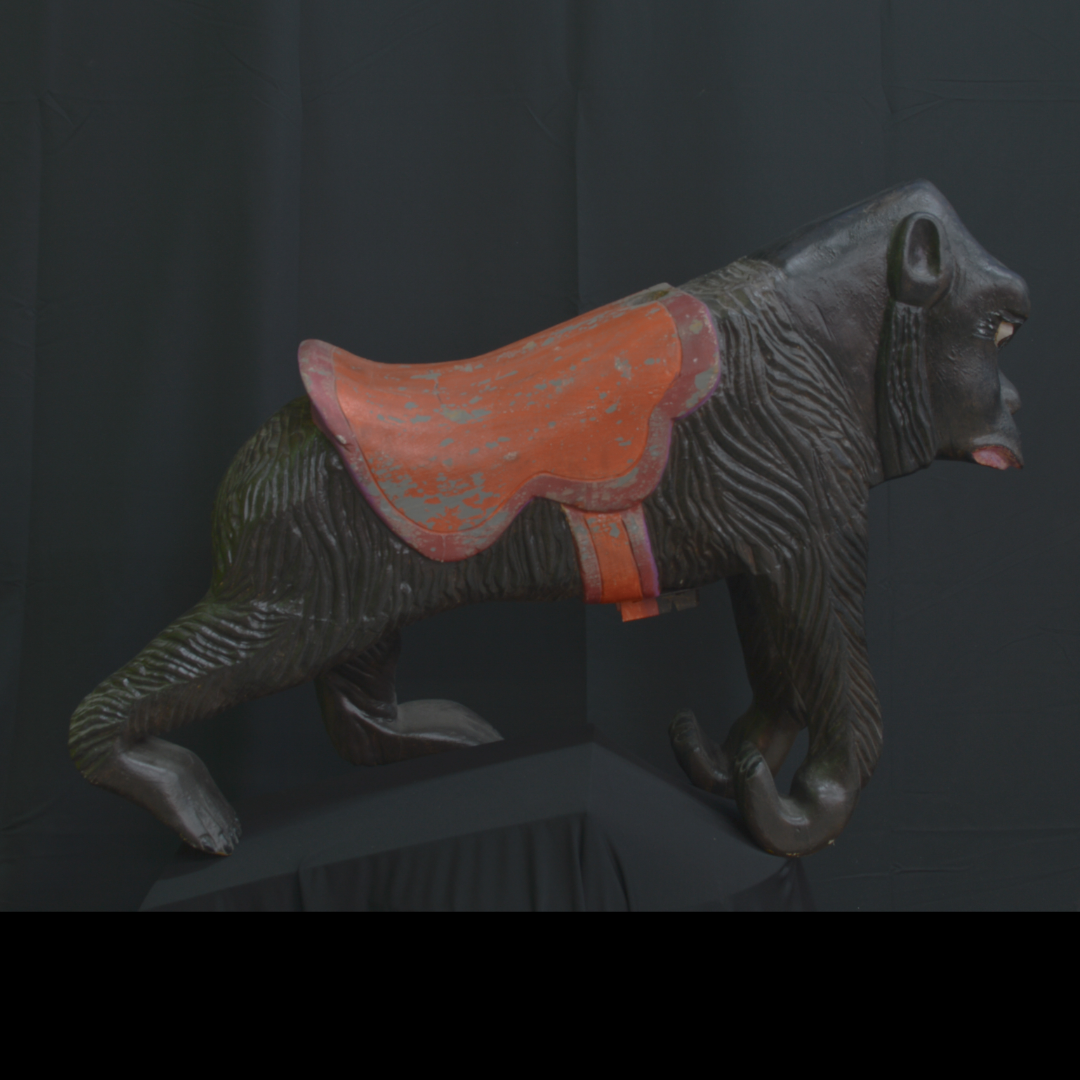
Ortega
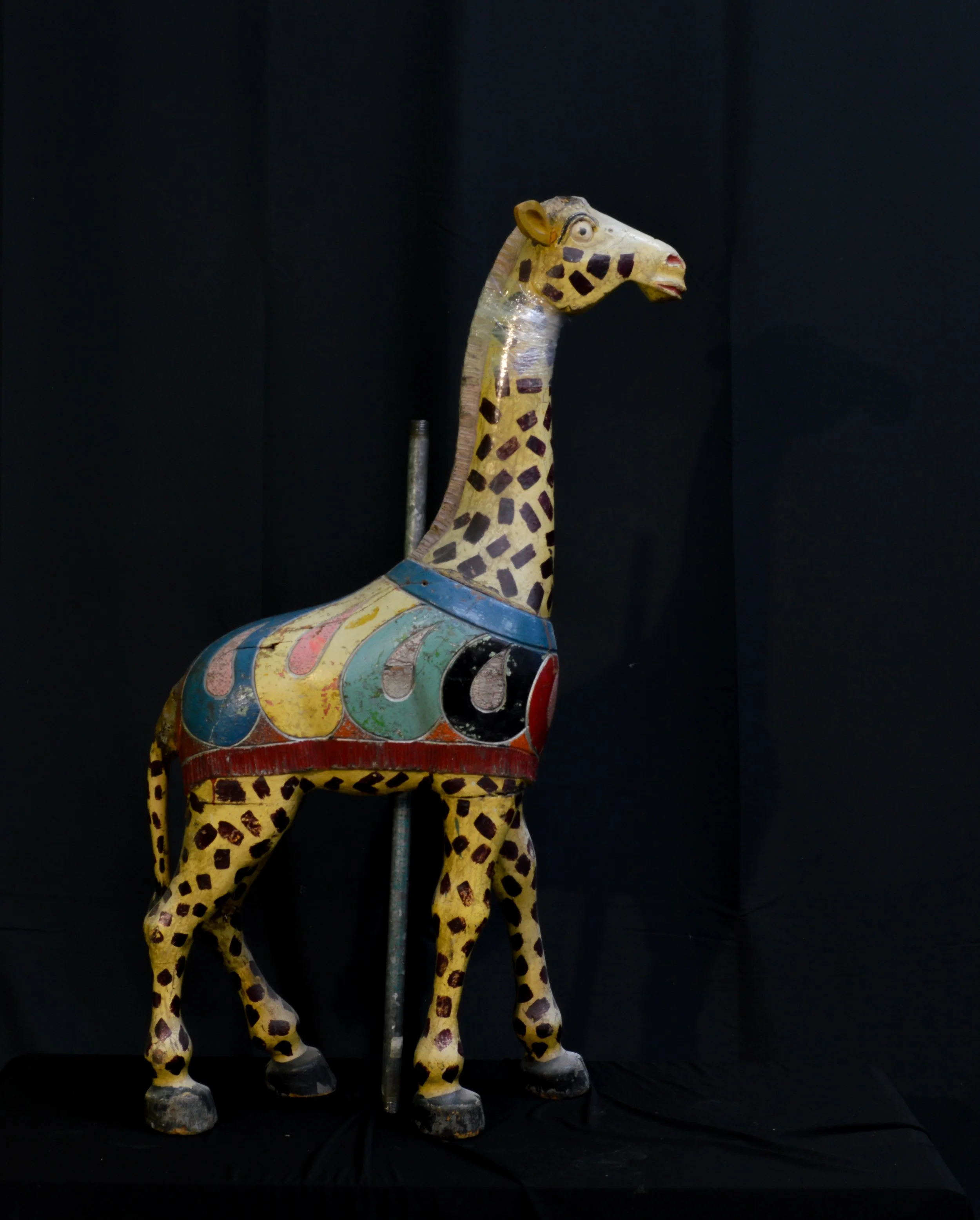
Unknown
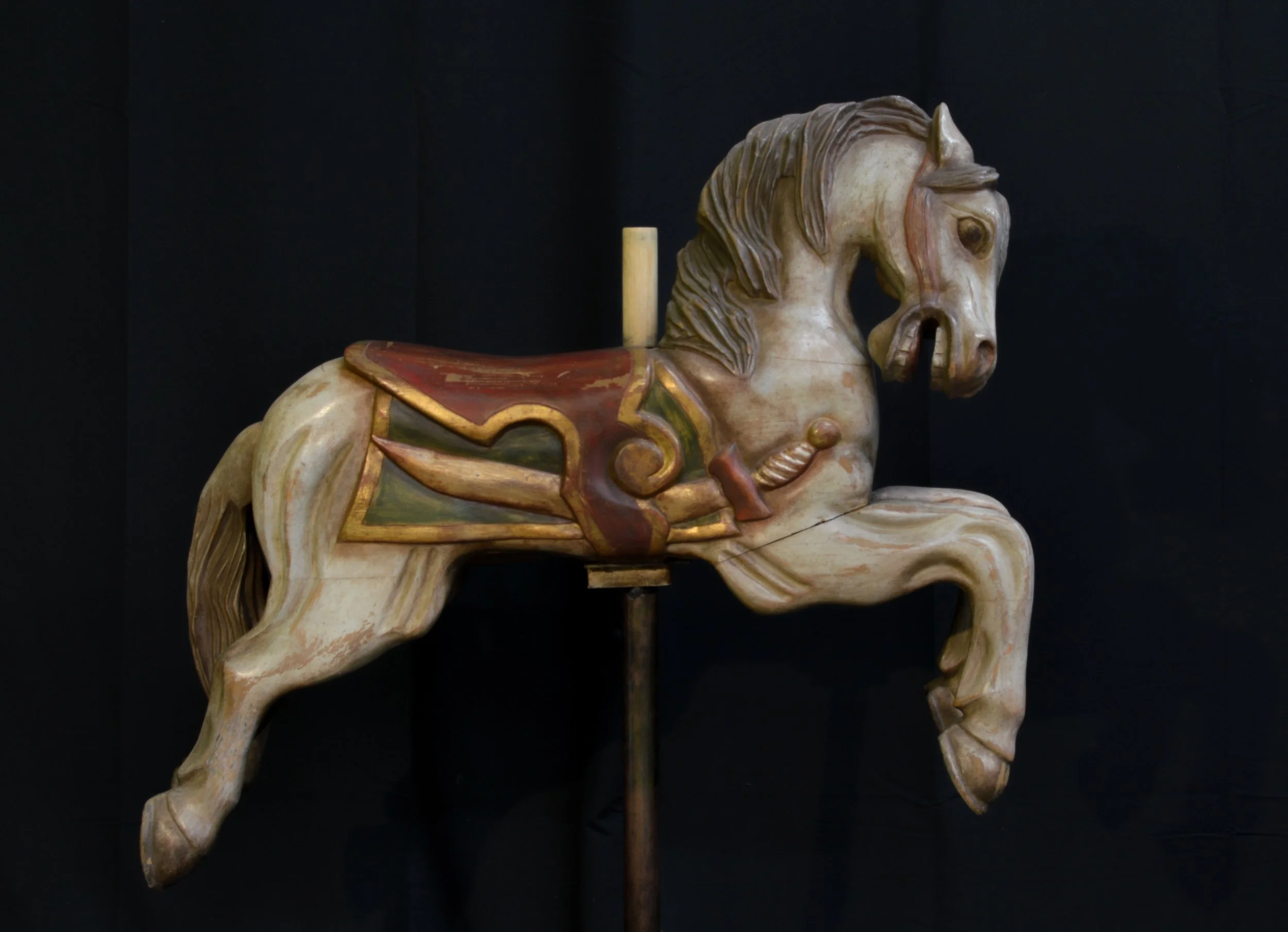
Ortega
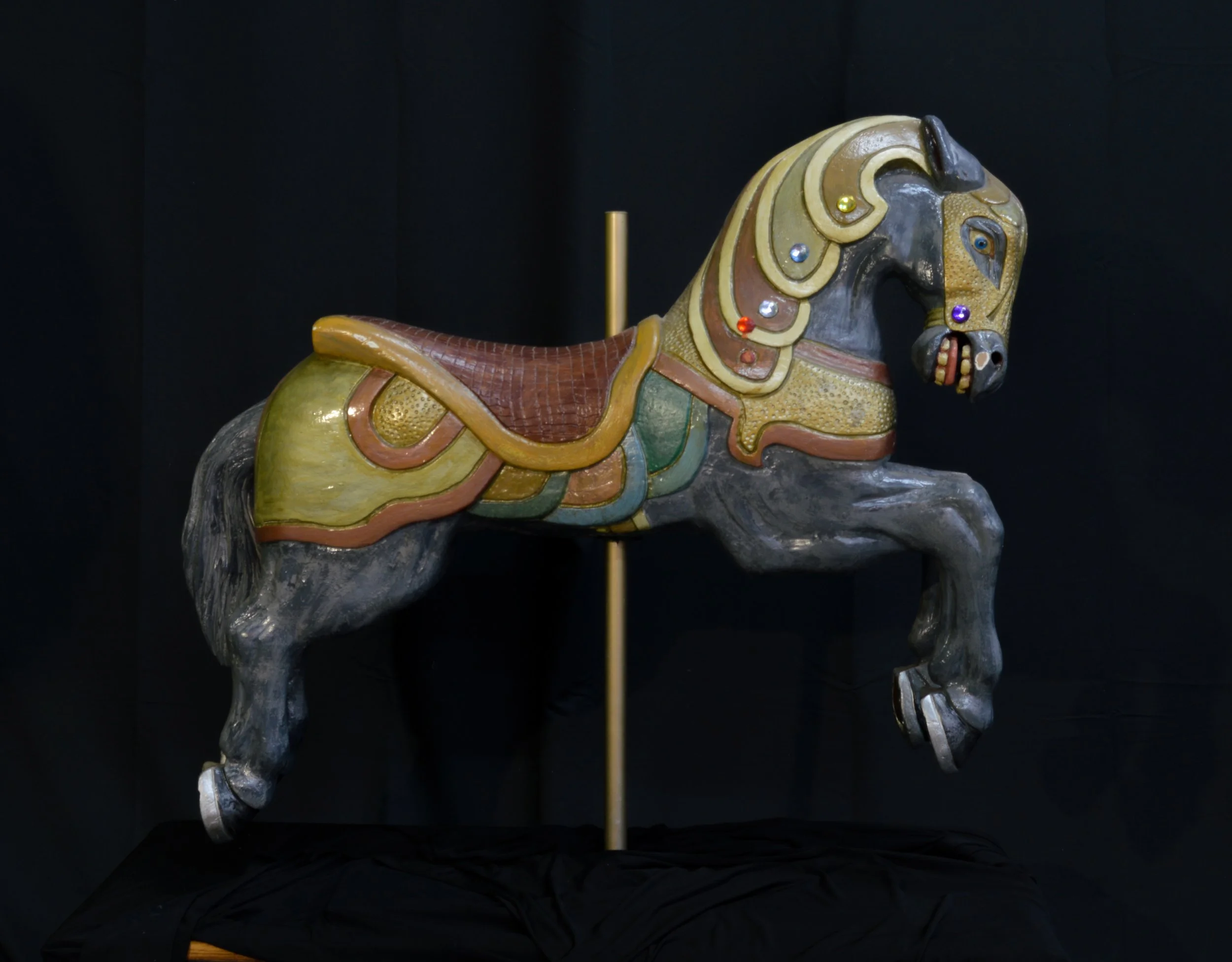
Unknown

Unknown