
English Pieces
English carousel work — known in its home country as fairground or galloper work — developed along different lines from the American tradition. The figures are typically smaller, the carving more compressed, the ornament denser, and the entire visual register tuned to a different kind of ride: the traveling fairground rather than the fixed amusement park. The Anderson workshop of Bristol, Frederick Savage of King's Lynn, and Orton & Spooner of Burton-on-Trent are the names that recur most often in the surviving record, and each is represented here.
What distinguishes the English work in this collection is its directness. Where the American factories aimed for grandeur, English galloper carvers aimed for legibility at speed — strong silhouettes, bold trappings, faces that read across a crowd at a country fair. The carving is often as accomplished as the American work, but the assumptions about how and where the figures would be seen were entirely different. A galloper horse rewards looking at it for what it actually is, rather than measuring it against an American factory standard it was never trying to meet.
The English entries here also include figures whose attribution remains uncertain — a condition typical of fairground material, where workshop records are thin, makers worked across each other's commissions, and a century of repainting has often buried what marks survived. Where attribution can be supported by documented stylistic correspondence or provenance, it is; where it can't, the entry says so plainly. Each entry combines direct observation, owner interview material, and independent research, with every claim labeled as reported, sourced, or inferred.
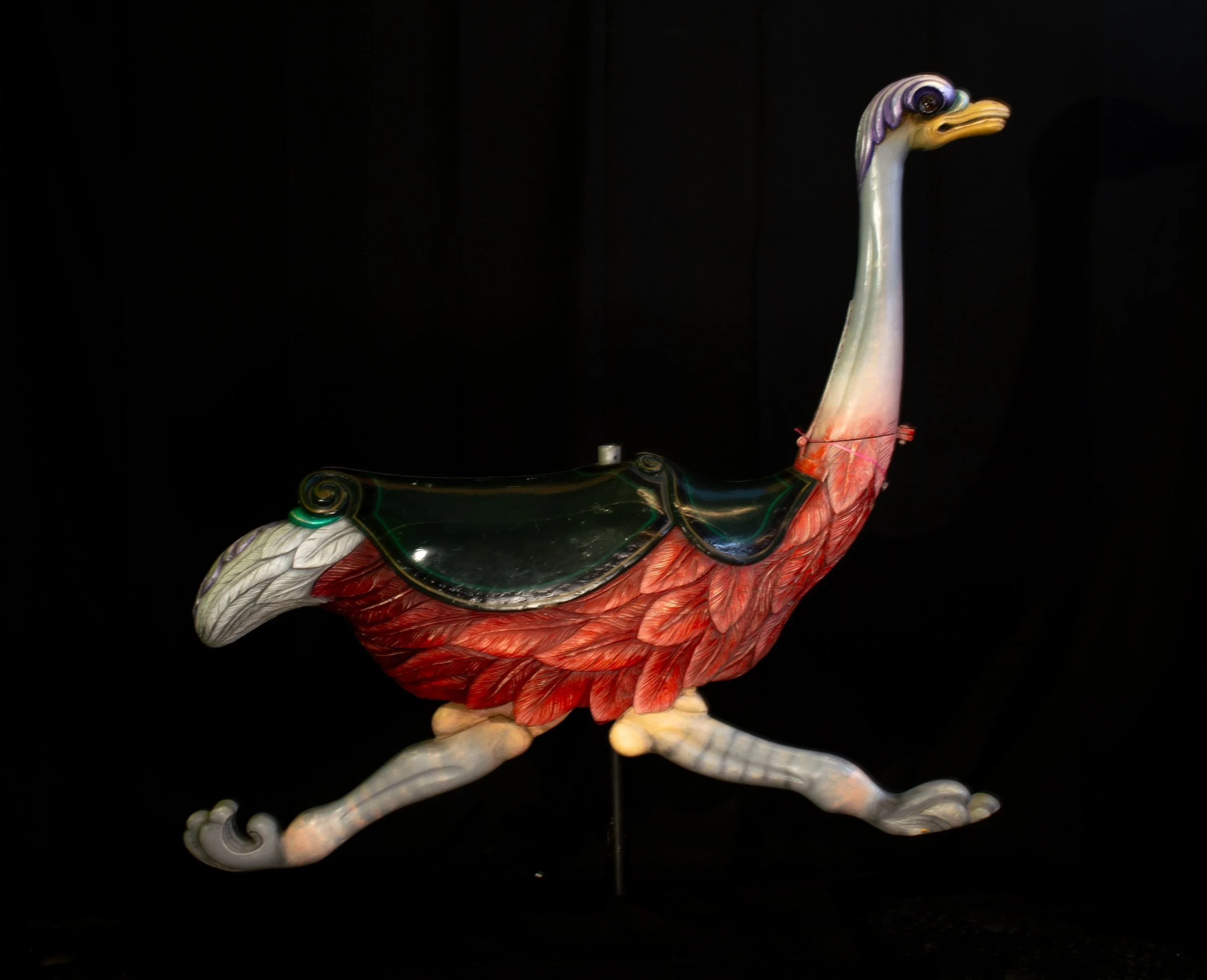
Frederick Savage & Co.
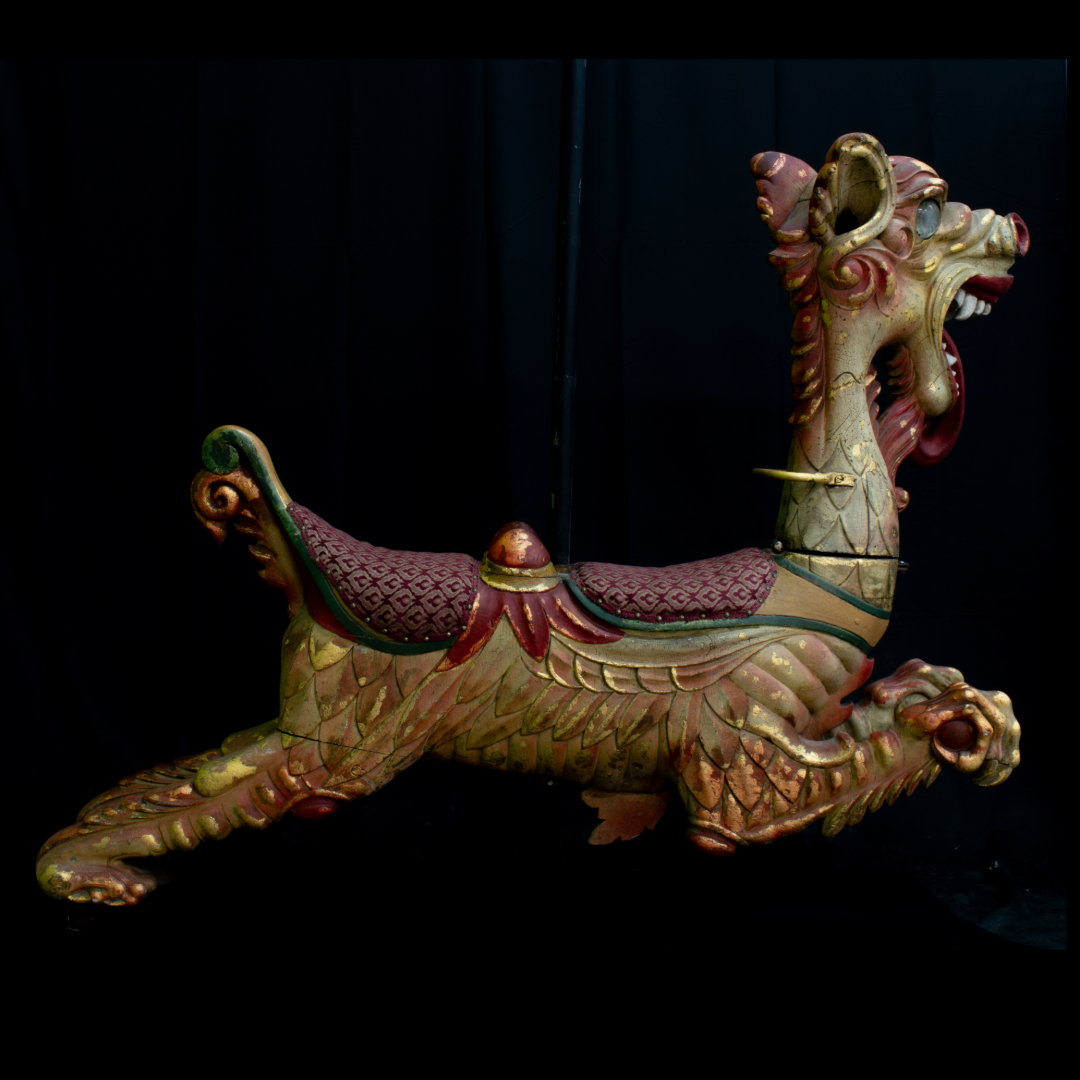
Anderson
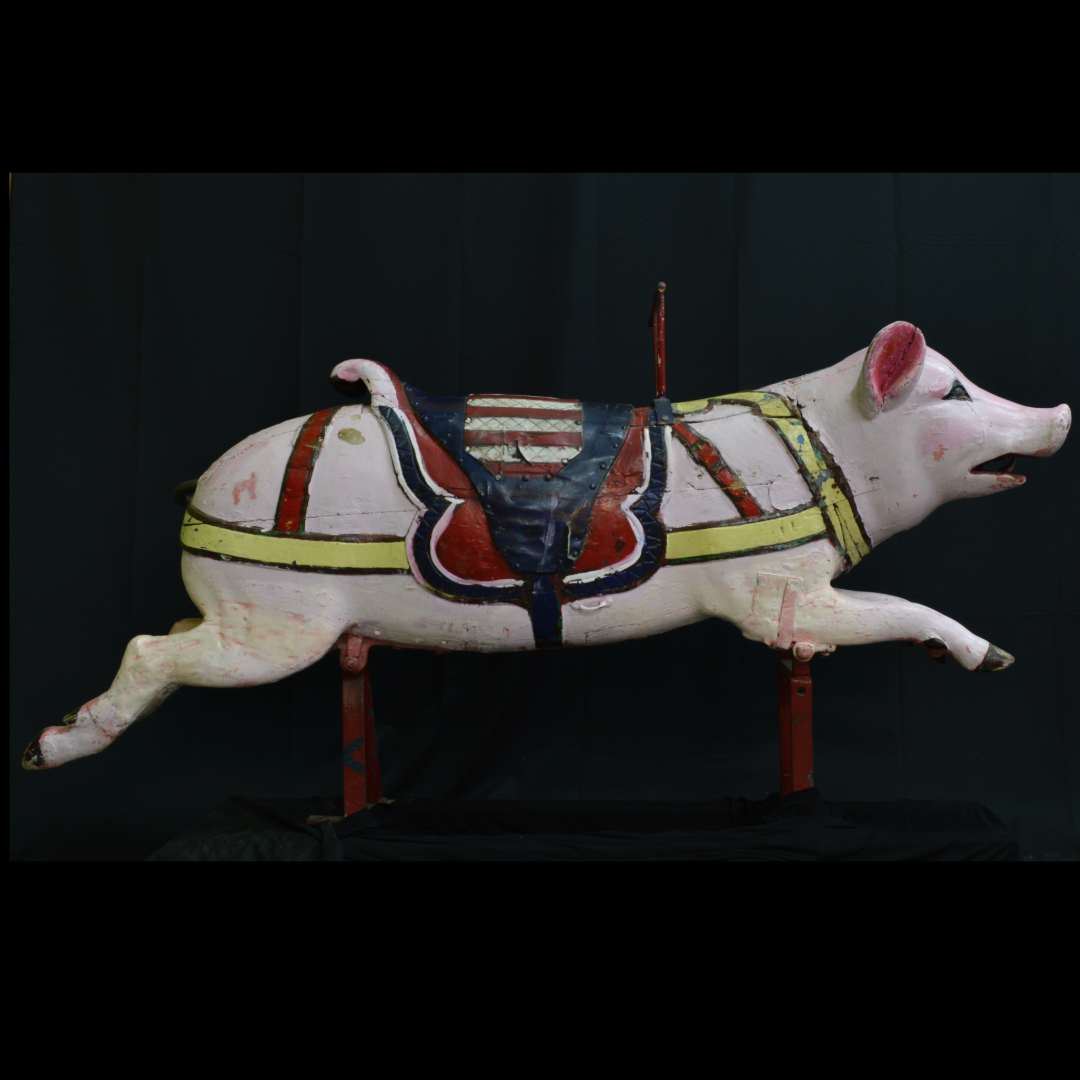
Unknown
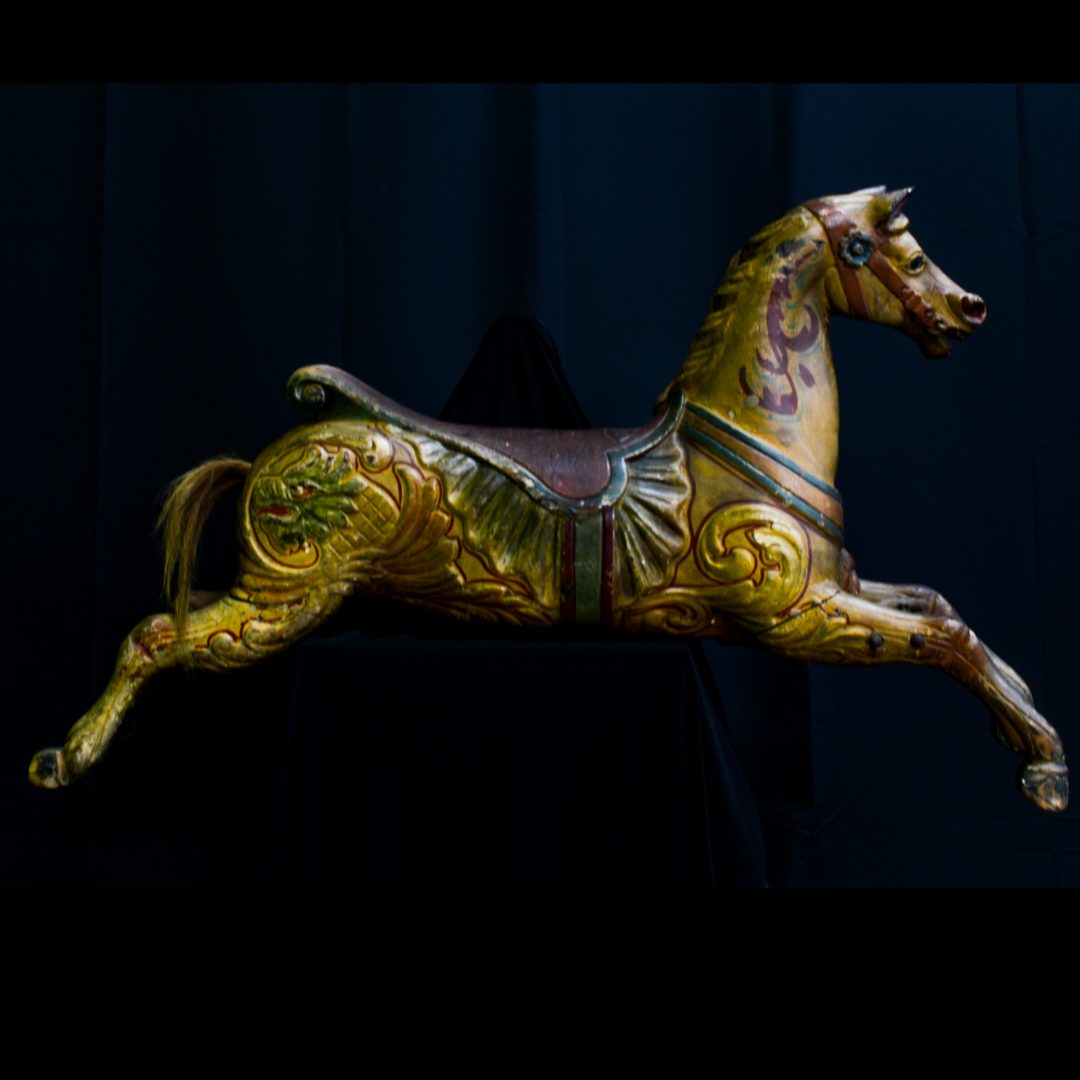
Anderson
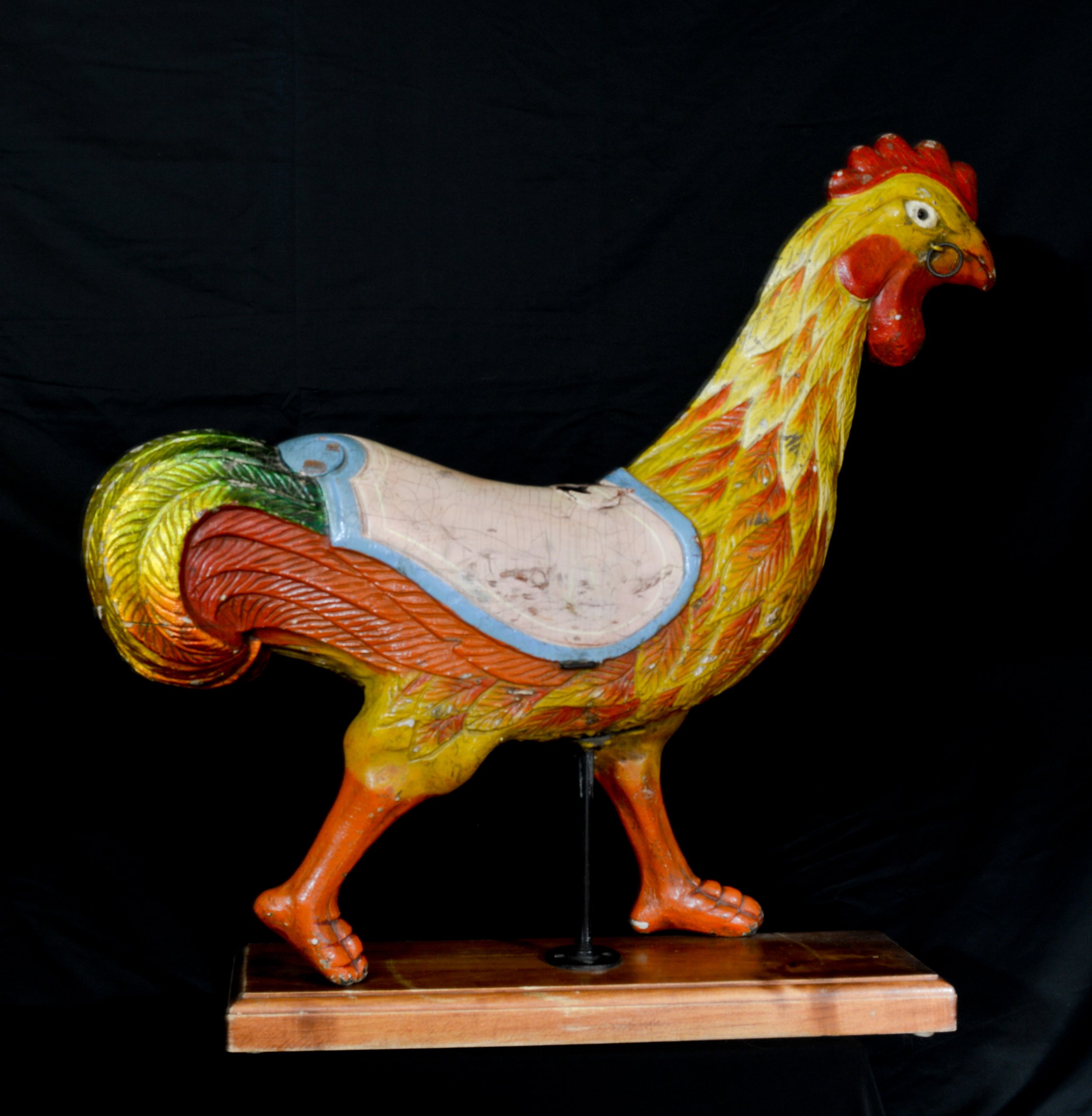
Orton & Spooner - Cockerel
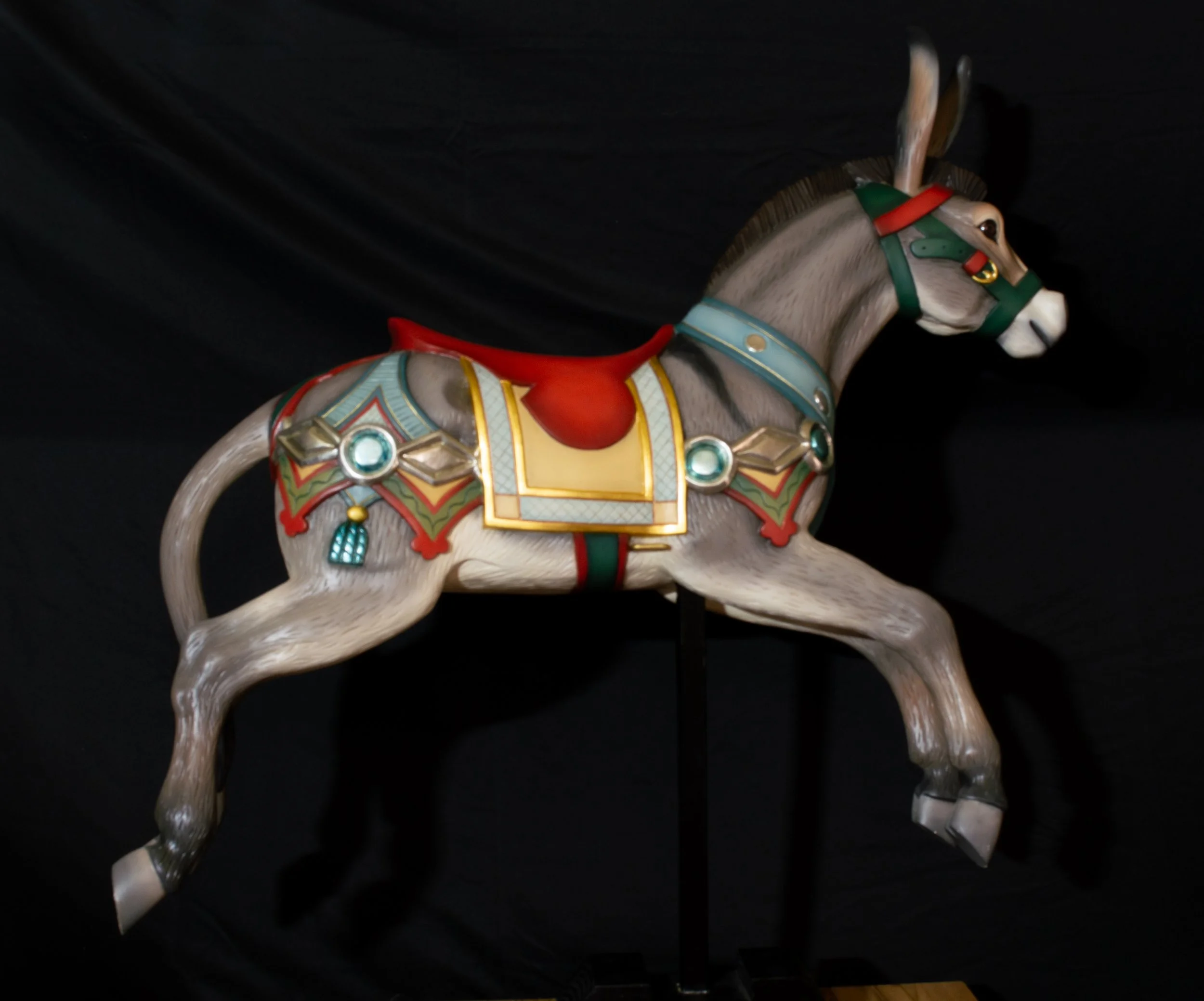
Unknown - Donkey