Disclaimer
This catalog is a living document. Entries are revised as new evidence comes to light, and attributions are updated accordingly. It is maintained for the enjoyment of the public and collectors alike, not as a final scholarly record.
About the Collection.
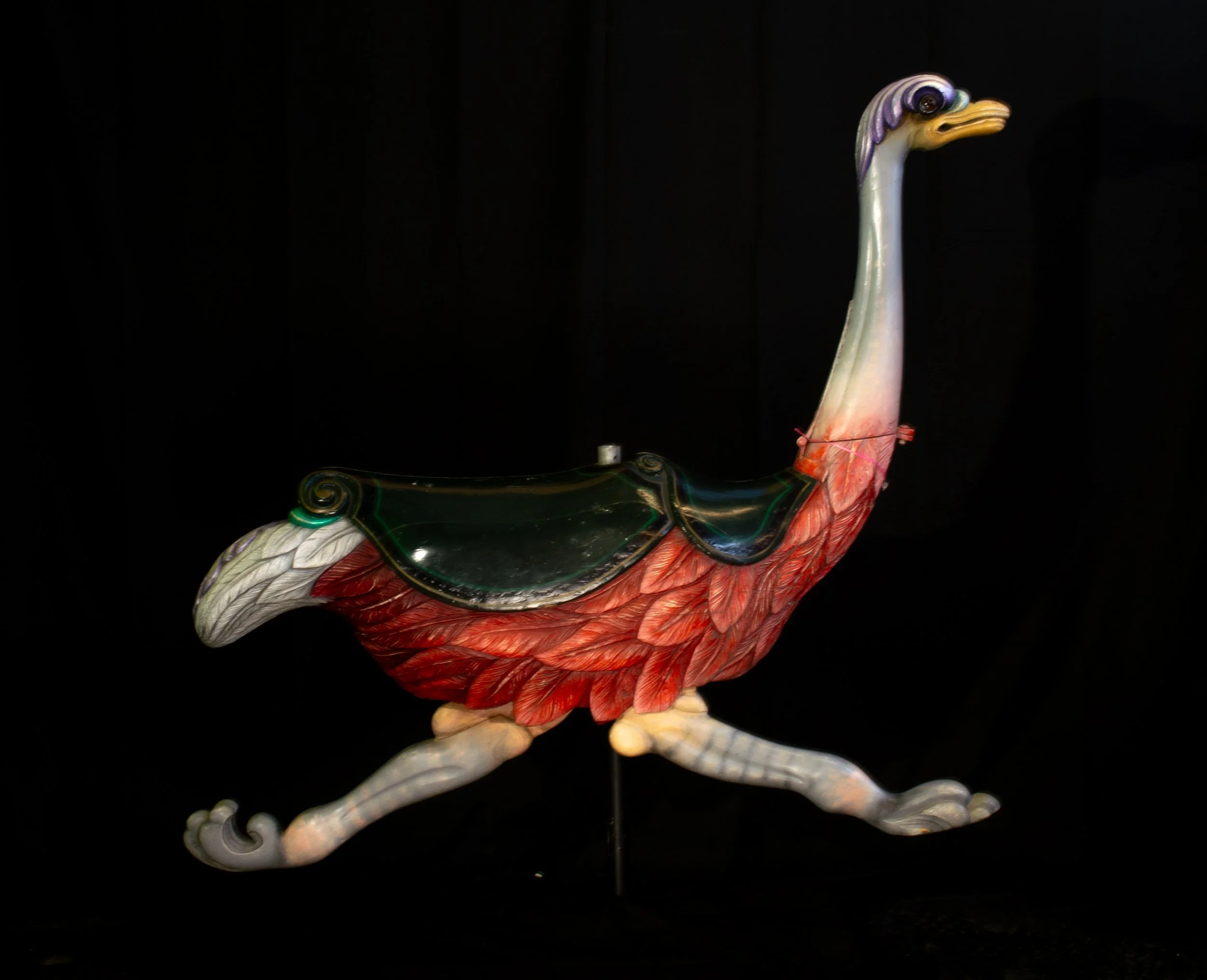
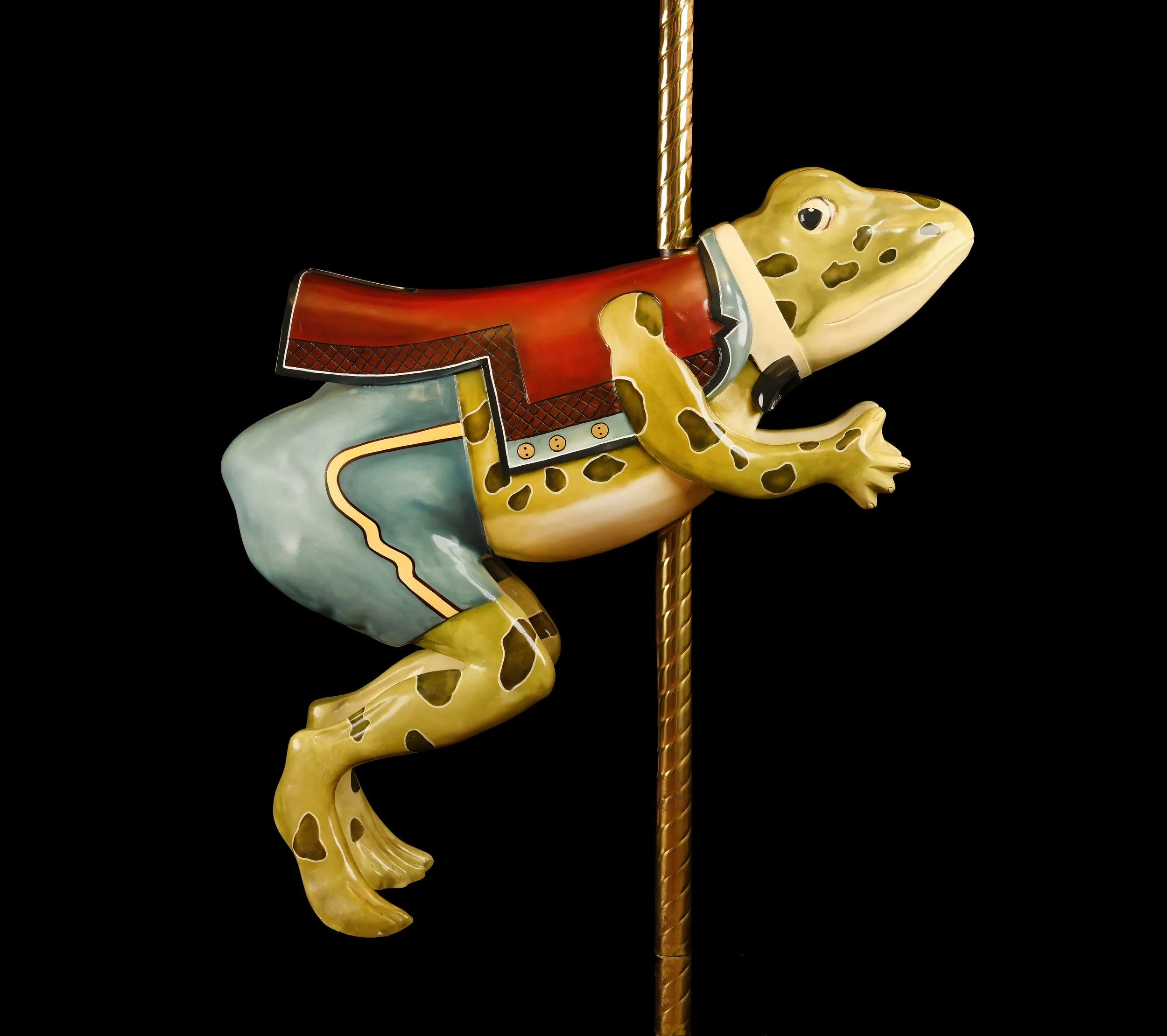
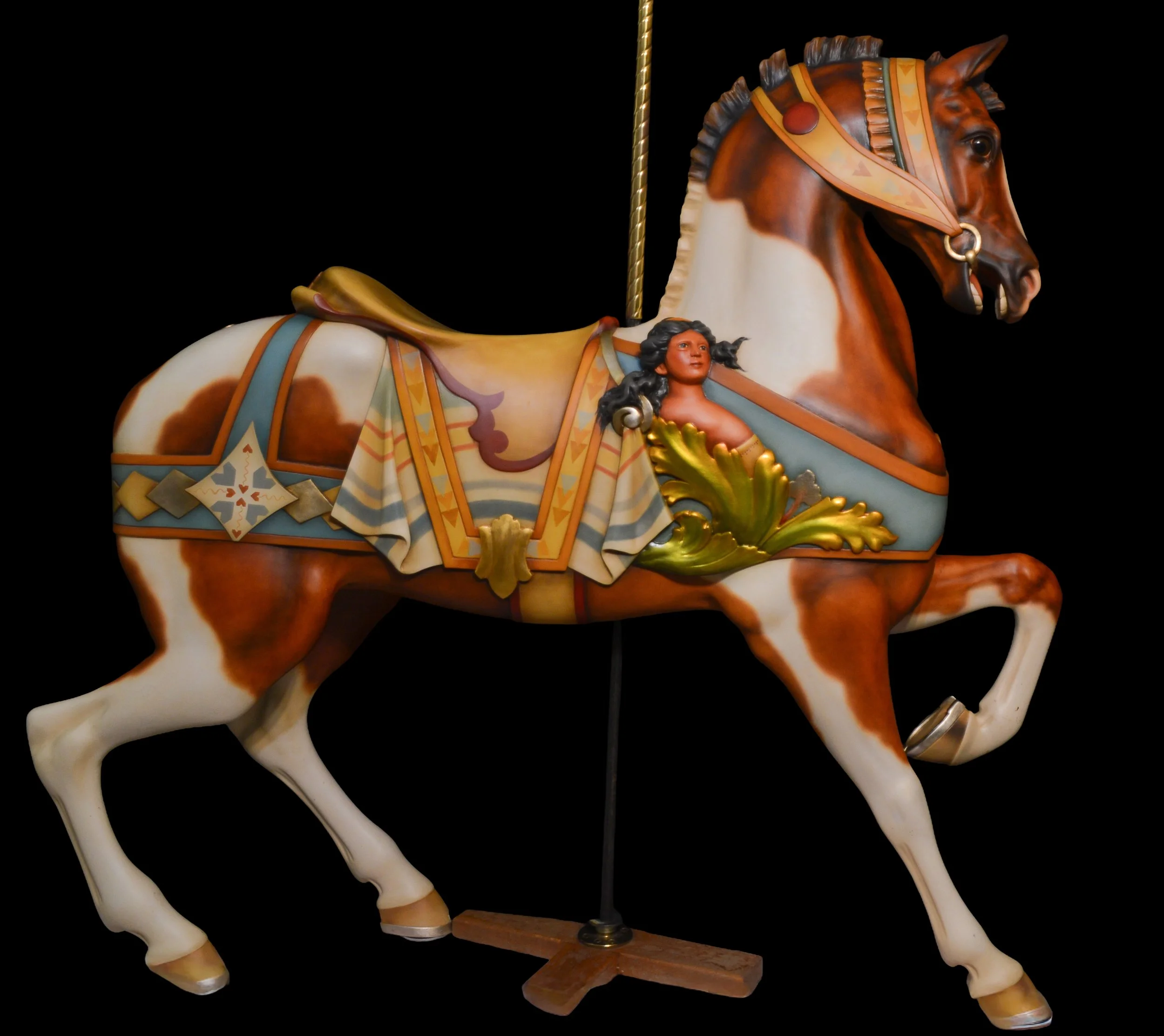
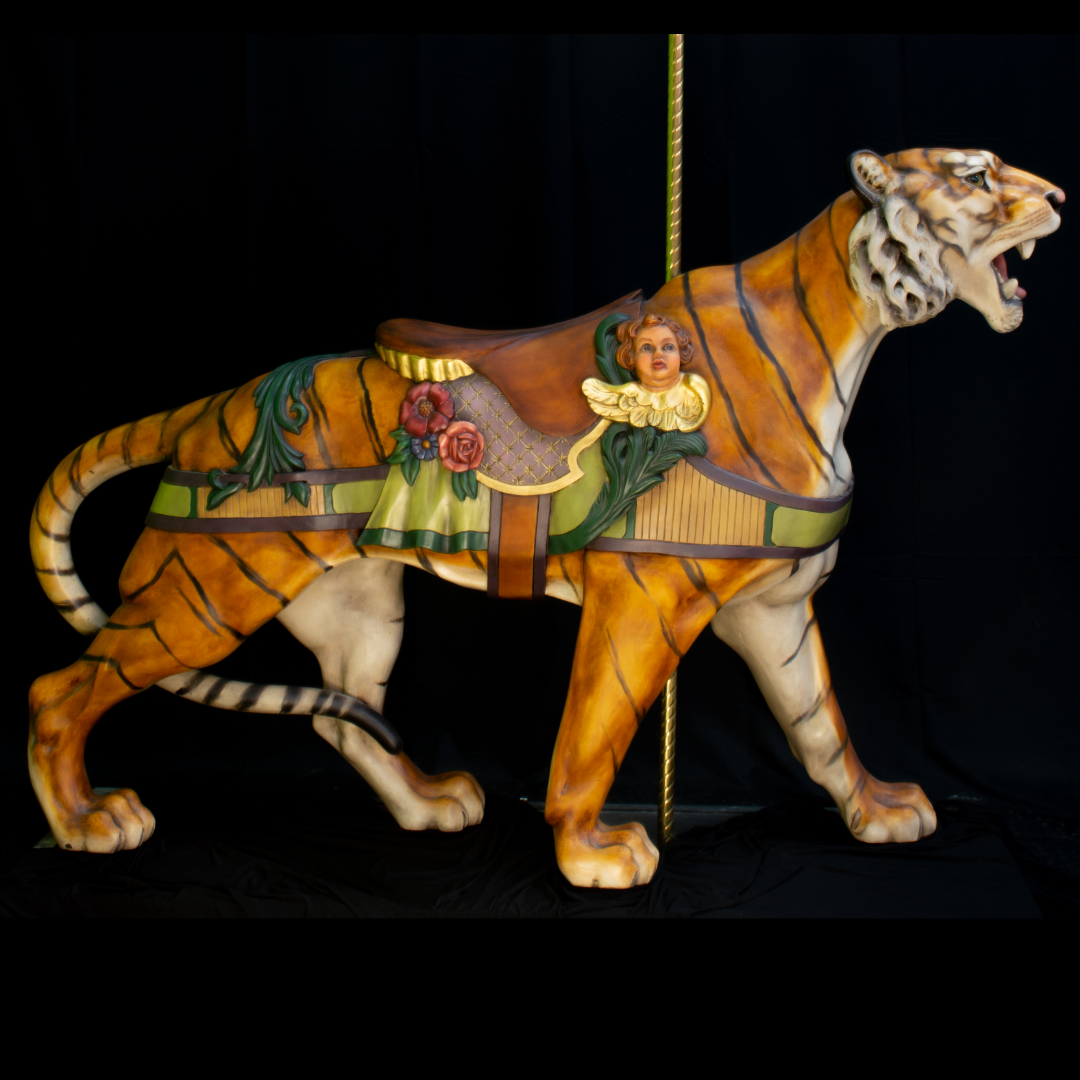
All Things Carousel documents a private collection of over one hundred antique carousel figures, fairground animals, and related amusement-park carvings assembled over four decades. The collection's purpose is preservation and record.
What the Collection Is
The American Golden Age of carousel manufacture ran from roughly 1880 to 1930, when a small number of immigrant-led workshops — chiefly in Philadelphia, Brooklyn, and the upstate New York towns of North Tonawanda and Coney Island — produced an estimated four to six thousand wooden machines and on the order of eighty thousand hand-carved figures (sourced — National Carousel Association estimates; Pueblo historic carousel record; Smithsonian Magazine). Most are gone. Fire, weather, neglect, and the secondary market that emerged in the 1970s dispersed the survivors. The National Carousel Association maintains a working census; recent estimates of intact operating wood carousels in North America hover around 150 to 165 (sourced — NCA census, as reported by the Carousel of Smiles and Smithsonian Magazine).
This collection sits in that context. It is not a museum and does not aim to be comprehensive. It is one private accumulation of figures that survived the dispersal — assembled deliberately over forty years, documented as carefully as the available evidence allows, and presented here with the labels and provenance threads intact.
Scope
The collection spans four overlapping traditions:
American Golden Age — figures attributed to Dentzel, Philadelphia Toboggan Company, Charles Looff, Herschell-Spillman, Armitage-Herschell, Allan Herschell, C.W. Parker, Stein & Goldstein, Charles Carmel, M.C. Illions, Daniel and Alfred Müller, and E. Joy Morris. These are the names that defined the period; the catalog includes documented examples and attributed examples, with the distinction labeled in each entry.
European fairground — work attributed to Gustave Bayol of Angers, Frederick Savage of King's Lynn, Anderson of Bristol, Friedrich Heyn of Neustadt, Mathieu, Orton & Spooner, and several unattributed Continental workshops. The European tradition produced a different aesthetic — smaller figures, denser ornament, a recognizable fairground vocabulary — and the collection treats it as a distinct line rather than a footnote.
Mexican carnival and carousel figures — Ortega, Flores, the Higareda Brothers, and a substantial body of unattributed Mexican children's-size pieces. This is the least-documented region in the secondary literature and the catalog notes that absence explicitly where it applies.
Decorative and related pieces — a small number of figures acquired as carved sculpture rather than as carousel animals proper, catalogued for completeness and labeled as such in each entry.
Provenance
A private collection's historic value rests on the chain of hands a figure has passed through. Several recurring threads run through this one:
The Walter and Mary Lawrence Youree collection of Oregon City supplied an early and consequential set of pieces, including the figure that founded this collection in December 1985. Walt Youree (1915–2001) is memorialized in the carousel-history literature; portions of the Youree holdings went to the American Folk Art Museum, and the pieces that came west to this collection are documented accordingly.
The Ersepke collection is the source for several Bayol, PTC, Dentzel, and E. Joy Morris pieces in the catalog. The Tuttle collection of Gray and Judy Tuttle is the prior owner of the PTC hippocampus and the Dentzel cat. The Swenson collection, assembled by the Broadway performer Swen Swenson before his death in 1993, is referenced in the catalog through the November 1993 auction record and is the source of the Orton & Spooner rooster. Material from the Murphy collection appears via a Müller standing horse.
A smaller set of pieces came from dealers — Jim Aten of Portland and Rusty Donohue of Baltimore among them — and from auction at Morphy Auctions, Bonhams, Norton Auction Galleries, and several regional houses. Where a piece is from one of these sources, the entry says so; where the chain breaks or the prior collection cannot be confirmed, the entry says that instead.
Restoration
A significant share of the figures in the catalog have been restored by named conservators working in a documented lineage. Pamela Hessey of Hawk's Eye Studio in Kingman, Arizona, and Lise Liepman of Albany, California — both protégées of the late Nina Fraley — account for the majority of the restoration work present in the collection. Earlier pieces carry restoration credits from Mary Lawrence Youree, Richard DeCuir, and June Reely. Tobin Fraley, carousel historian and restoration specialist, has examined pieces in the collection and provided attributions noted in the relevant entries.
Restoration in this field is not cosmetic. A correctly painted figure preserves the maker's design intent; an incorrectly painted one obscures it permanently. The choice of restorer is part of a figure's provenance and is treated as such throughout the catalog.
How the Catalog Works
Each figure has its own entry. Entries follow a fixed structure: a physical description, the circumstances of acquisition, the provenance trail, the maker and rarity context grounded in independent research, condition notes and the sources consulted.
Every claim in the catalog carries a label. (Reported) means the information comes from the original owner or seller and has not been independently verified. (Sourced) means the claim is confirmed against external documentation — specialist archives, auction records, institutional holdings, reference literature. (Inferred) means it follows from photographic or contextual evidence but is not directly documented. Where nothing reliable is known, the entry says so.
Confidence in each attribution is rated explicitly, with a one-line account of what the rating reflects. The catalog does not treat the absence of contradicting evidence as confirmation, and it does not treat collector consensus as documentation.
Sources and Reference Material
The catalog draws on Charlotte Dinger's Art of the Carousel (1983), Tobin Fraley's The Carousel Animal, Richard Gardner's PTC Carousels, Carrousel Art magazine, and Weedon and Ward's Fairground Art for primary reference. Auction records are pulled from Morphy Auctions, Bonhams, Sotheby's, Christie's, Guernsey's, Sworder's, Brunk, Soulis, Jeffrey S. Evans & Associates, and the LiveAuctioneers and Invaluable archives. Institutional context comes from the National Carousel Association, the American Folk Art Museum, the National Fairground and Circus Archive at the University of Sheffield, and the Fairground Heritage Trust. CarouselHistory.com, AntiqueCarousels.com, and VintageCarousels.com serve as specialist research layers.
Located in Oregon