
German Pieces
German fairground carving developed alongside the English and French traditions, supplying the traveling shows and seasonal fairs of central Europe with carved wooden figures from roughly the 1870s through the early twentieth century. The work is less widely documented in English-language sources than its American or English counterparts, and surviving figures outside European collections are scarcer in consequence. Friedrich Heyn of Neustadt an der Orla is the most prominent of the German makers, and Heyn figures occasionally surface in the international market — typically smaller in scale, with finely controlled carving and a distinctive Central European character in the face and trappings.
The German representation in this collection is small but specific. The work shows the qualities the tradition is known for: compact scale, confident carving, and an aesthetic that sits between the English galloper and the French children's-carousel idiom without quite belonging to either. Where attribution can be supported, it is; where the field offers no comparables, the entry says so honestly. Each entry combines direct observation, owner interview material, and independent research, with every claim labeled as reported, sourced, or inferred.
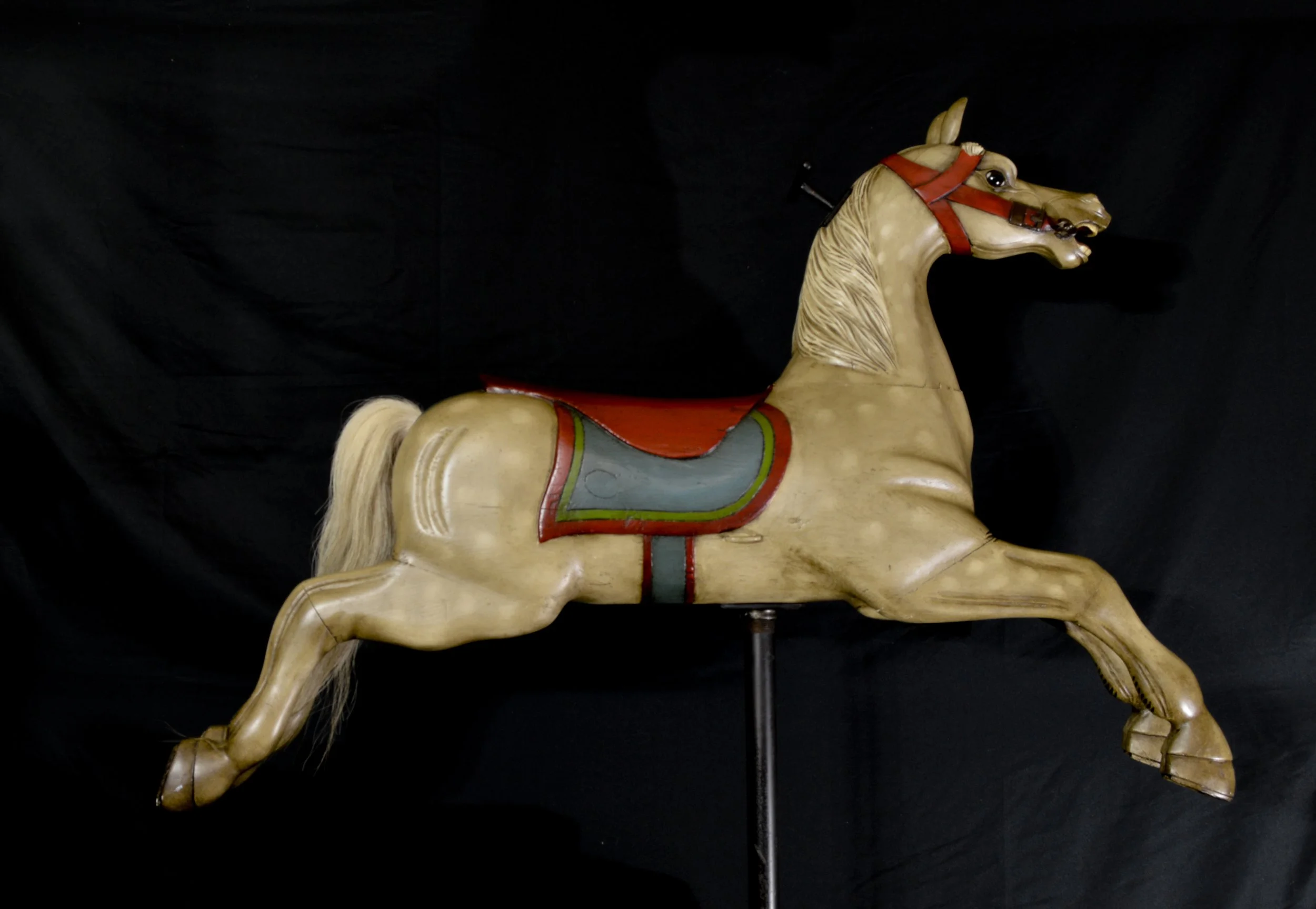
Heyn - Horse