
Friedrich Heyn 1870-1959
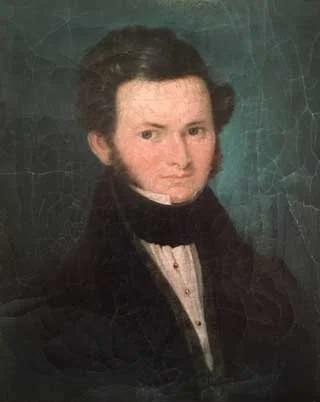
Friedrich Heyn was a master carpenter (Zimmermann) who founded what is generally recognized as the earliest established carousel-figure factory whose operation can be positively dated — predating the Angers French ateliers, the British fairground workshops at King's Lynn, and the Philadelphia school in the United States (sourced — Ward & Weedon, Fairground Art; Marchal, L'Art Forain). Heyn began carving horses for private customers in the late 1860s and formally founded the Caroussell-Pferde und Kunstfiguren-Fabrik ("Carousel-Horse and Art-Figure Factory") in 1870 in Molbitz, a small village near Neustadt-an-der-Orla in Thuringia. By 1884 the works employed thirty hands and shipped its thousandth carousel piece that same year. Heyn then handed the Molbitz workshop to his partner Karl Müller — who continued producing carousel figures there independently until 1914 — and relocated to Neustadt to establish a larger plant; around 1890 he and his son, a gifted sculptor, opened a modern steam-powered factory there. By the 1880s the firm was advertising in the French trade press Le Voyageur Forain alongside Bothmann and Müller, and by the turn of the century its letterhead and catalogues circulated in German, English, and French, with shipments to all of Europe and onward to America and Australia (sourced — Kulturgut Volksfest archive; Köpp 1992; Marchal 2002).
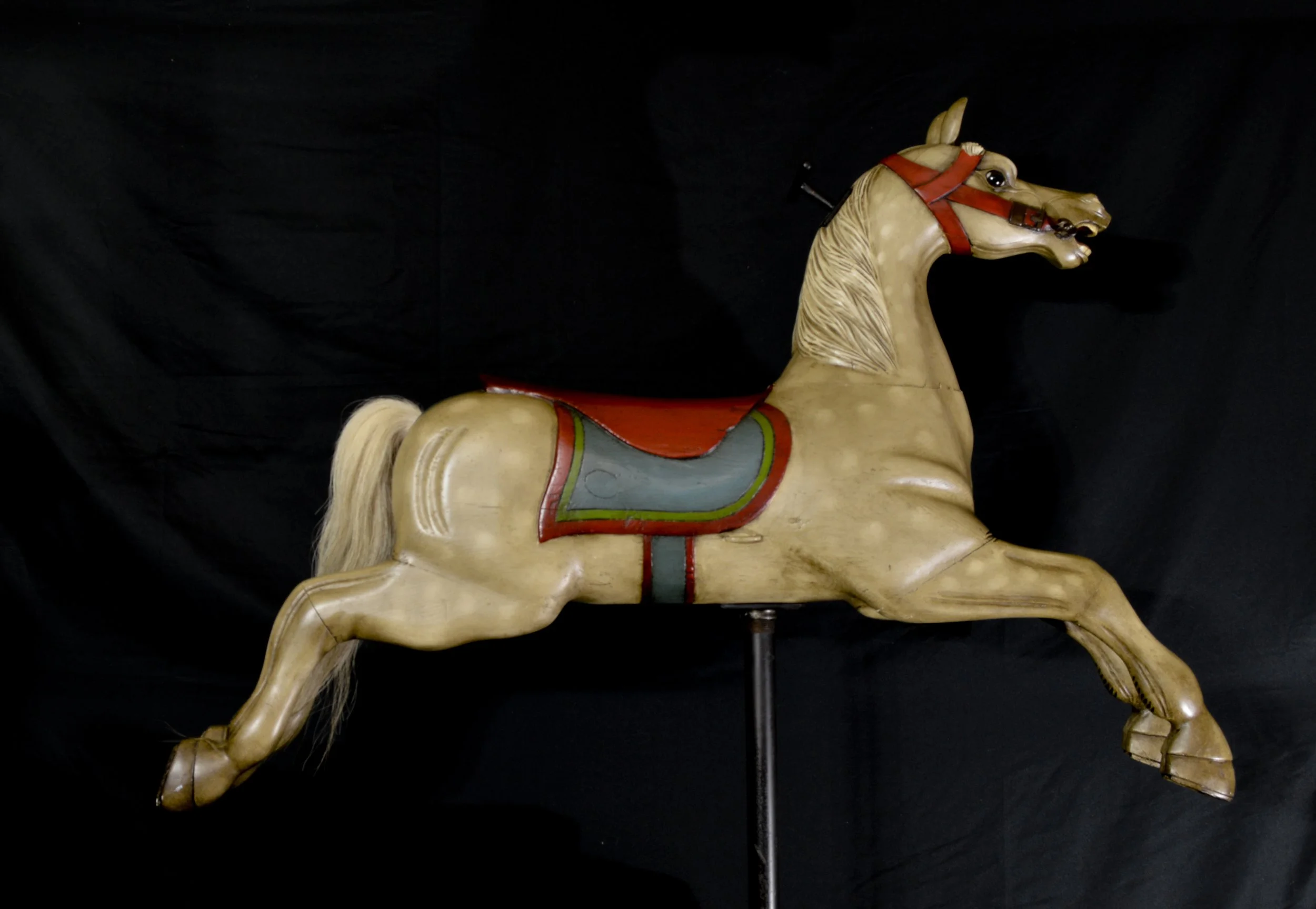
The Heyn output convention is the most thoroughly documented of any nineteenth-century carousel maker. The 1905 catalogue offered twelve sizes of carousel horse ranging from 57 cm to 150 cm body length, in five decorative grades, with prices from 21 to 145 marks; hardwood legs were available for extra charge, and the firm's signature was the so-called "Dresden horse" — a heavily decorated luxury model with embossed brass ornaments, polished colored glass cabochon jewels, and inset glass eyes, finished on hand-carved limewood. Real horsehair tails were standard on better grades. Bodies were carved short-backed and slightly more compact than living anatomy to produce, in the workshop's own words, "a fine illusion of reality." After Heyn's own retirement the firm continued under successors — by 1911 the proprietor was master carpenter Richard Keime, the year Heyn took a gold medal at the Berlin trade exhibition for carousels and carousel figures, shared with Neustadt rival Josef Hübner. The factory expanded into Berg-und-Talbahn rides in the 1930s, delivered its last major carousel (Fahrt ins Paradies) on April 25, 1939, and operated until the bankruptcy of final owner Arno Ebert in 1959, when surviving business records and drawings were reportedly destroyed (sourced — Kulturgut Volksfest; Historische Gesellschaft Deutscher Schausteller; Fredebeul 2019; Neustadt Kreisbote, 18 August 1911). The auction record for Heyn currently stands at €38,400 for a rearing Dresden horse sold at the Marchal collection dispersal through Cornette de Saint Cyr in 2011 (sourced — Drouot auction record).
087